Many people who go through trauma—whether war, violence, exile, or grief—can’t imagine they’ll ever be happy again. “I thought I’d never laugh again,” survivors often say. “I couldn’t picture joy.” That’s not just poetic. It’s a psychological reality: trauma distorts time, and suffering feels permanent. But time passes. Healing, slowly, becomes possible. Laughter can return. Not because circumstances improve overnight—but because human beings can choose to reframe their story.
That’s what the Jewish people do best.
This is what Passover teaches us.
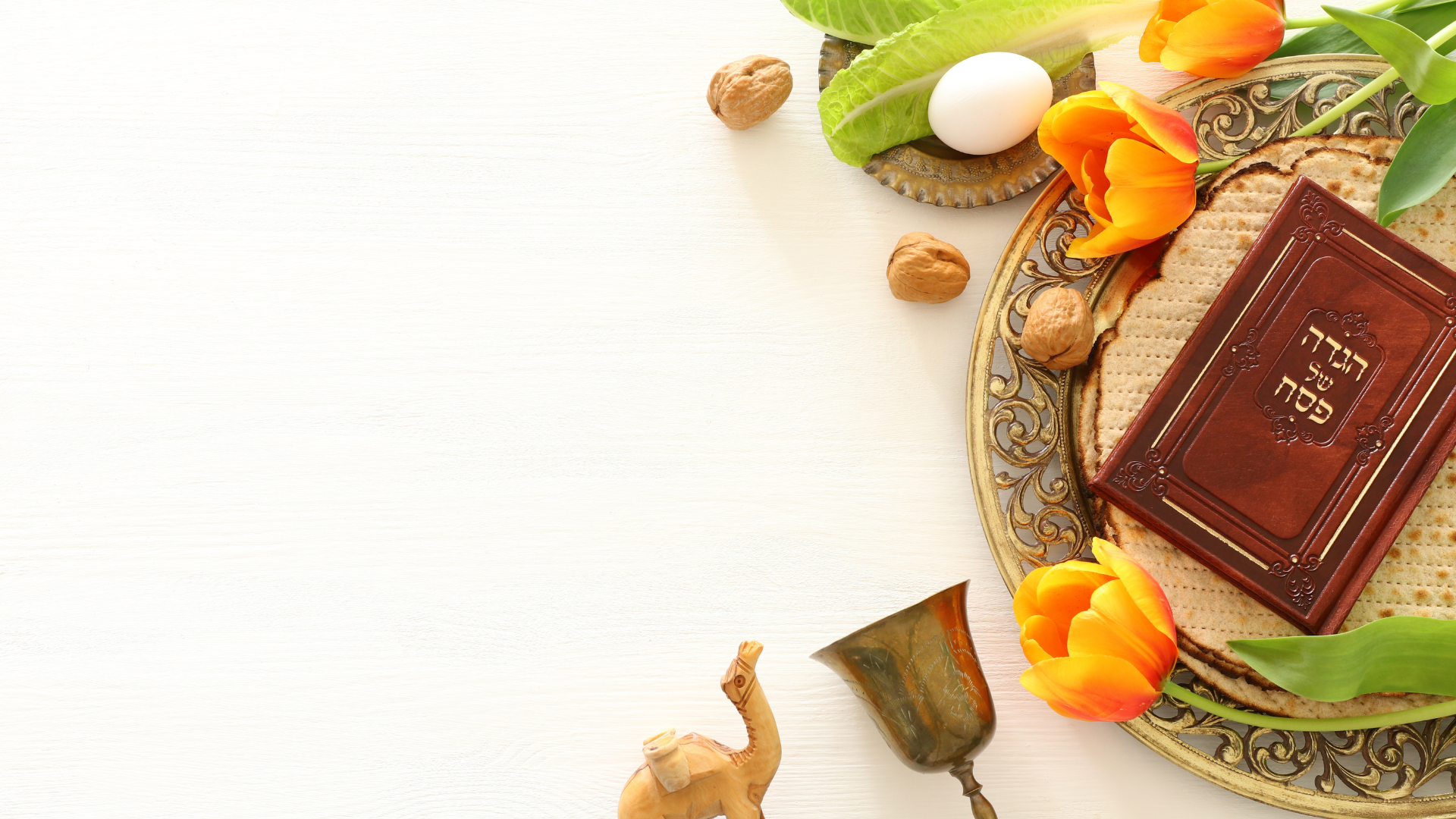
At its core, Passover is not just a celebration of historical redemption. It’s an annual exercise in narrative transformation. We sit around the Seder table not only to recall what happened to us, but to reshape what it means. We begin the night with lechem oni—the bread of affliction—and by the end of the night, that same matza becomes the bread of freedom. Nothing about it has changed. Only our understanding of it has.
That’s the heart of freedom: the ability to make meaning, even in the most dire circumstances. To decide that a story of pain doesn’t have to end in pain. That survival can turn into renewal. That functioning can become flourishing.
In psychology, we often speak about functioning. Can a person get out of bed, go to work, eat meals, hold a conversation? These are important questions. In the aftermath of trauma, functioning is a major milestone. But is that enough?
There’s something dehumanizing about setting the bar at “function.” It reduces the human spirit to whether or not the basic systems are operational. The matza, too, is just about function: no taste, no beauty, just sustenance. It is lechem oni—bread of affliction. And in our time, we saw this made real in the words of Eli Sharabi, whose brother Yossi and nephew Arbel were murdered in captivity. He described how the hostages in Gaza were fed one pita a day—not as nourishment, but as a tool of control. “It wasn’t food—it was humiliation,” he said. The act of begging for that single pita became a daily ritual of degradation. It was designed to break the spirit, to strip people of dignity. And yet, even in those conditions, there were moments of human resilience—hostages encouraging one another, trying to hold onto identity. That, too, is part of what matza holds: not only affliction, but the quiet strength it takes to survive.
This is not denial. It’s not toxic positivity. It’s a disciplined, sacred act of reinterpretation.
In trauma research, there’s a concept called event centrality—how central a traumatic event becomes to someone’s identity. The more it takes over the sense of self, the harder it is to recover. But there’s good news: centrality is not fixed. It’s shaped by the narrative we tell ourselves. This is why the Seder is so powerful. It invites us to revisit our pain—and to reshape it.
And this is also why the Jewish people are so powerful. We are not defined by our suffering. We are defined by our inspired narrative.
We are not free because of our circumstances—we are free because of our identity. We are an am hofshi—a free people—even in the worst conditions. Even in exile. Even in the camps. Because we never stop believing that freedom is possible. We are not just chorin—free—we are bnei chorin: children of freedom. It is not only what we long for; it is who we are. And an identity that is inherited cannot be taken away. There is always a choice—if not in action, then in interpretation. If not in control, then in meaning.
Victor Frankl, Holocaust survivor and psychiatrist, wrote: “Between stimulus and response, there is a space. In that space lies our power to choose our response. In our response lies our growth and our freedom.”
Dr. Edith Eger, also a survivor and therapist, added: “We can choose to be victims, or we can choose to be survivors.”
The space between affliction and response—that’s where freedom lives. That’s where we build our resilience. But it’s not easy. It takes immense courage and effort to believe in freedom when everything around you screams enslavement. To believe in healing while still bleeding.
That’s why we need role models who don’t deny struggle—but move through it. And there is perhaps no greater model than Yaacov, the father of our national name, Yisrael.
Yaacov’s life is marked by unrelenting trauma. He is exiled from his home. Betrayed by family. Cheated by Lavan. His beloved wife dies in childbirth. His favorite son is presumed dead. He sinks into a grief so deep, he cannot leave his house. He is not functioning. And yet—he doesn’t stop grappling. He wrestles with man and with God, with fate and with self.
Why not Avraham? He also questioned. But he ultimately reached certainty—and that gave him the strength to face even the unbearable test of sacrificing his son. Yaacov, on the other hand, was meant to inherit that certainty. But he continued to wrestle with it. He lived a life of tension, never fully resolved—and that struggle became his strength.
And through that, he becomes Yisrael—the one who struggles and endures. As the Kli Yakar explains on the verse “ki sarita im Elokim ve’im anashim vatuchal” (“for you have struggled with God and with men and have prevailed”), this name is not a reward for one moment of wrestling with an angel. It reflects a lifetime of struggle—divine and human—and the ability to hold onto truth and integrity throughout. Yaacov becomes Yisrael because he doesn’t just question; he inherits pain and continues to wrestle with it. His strength lies in refusing to give up.
This is the Jewish story. Not a fairytale of triumph, but a tale of struggle, meaning, and recovery. And it’s not just about survival. It’s about what we do after we survive.
And that’s exactly what the Seder night models for us.
Everything about the Seder is designed with care and intention. We polish the silver, set the table, bring out our best dishes. We create beauty, order, dignity. But right at the center of it all—almost jarringly so—is the most humble food: matza. It doesn’t belong with the elegance. It’s dry, flat, tasteless. It feels out of place.
But that’s precisely the point.
The Maharal of Prague teaches that to experience true freedom, we must first experience oni—deprivation. Without loss, we cannot fully grasp what it means to be redeemed. The matza reminds us not only of the suffering of our past, but also of how much more deeply we can appreciate freedom once we’ve tasted its absence.
The matza is not there to match the table. It’s there to anchor the story.
It reminds us that even the most painful elements of our history—our trauma, our moments of barely functioning—belong in the center. Not to glorify suffering, but to show that growth doesn’t happen despite the pain, but through it. That the same matza we called the bread of affliction can, by the end of the night, become the bread of freedom.
Because freedom is not the absence of pain. It is the refusal to give up. It is the bold act of transforming survival into growth.
This is the Jewish superpower: To take the bread of affliction and raise it like royalty. To go from functioning to flourishing. To keep telling the story, even when it hurts.
This year, let’s sit at the Seder table with all of it: the grief, the joy, the memory, the hope. Let’s place the matza in the center—and remember that healing doesn’t erase affliction. It elevates it.
Because the deepest strength of our people is not that we were once redeemed. It’s that we never stopped believing redemption was possible.