Every Rosh Hashana, I return to the same question: What does this moment ask of us?
In 2024, less than a year after October 7, I wrote about grief, healing, and the need to allow joy to exist alongside sorrow. We were carrying wounds that were still very fresh, and much of the work was learning how to keep moving without denying what had happened.
Last year, I wrote about fragility. I described Israel as still living in the sukkah: exposed, uncertain, not yet ready to dance. We had learned that resilience does not mean pretending to be strong. Sometimes it means accepting vulnerability and continuing to build anyway.
This year, I find myself thinking about what comes next.
Not because the emergency is over. It is not. There are still families grieving, soldiers and reservists carrying experiences that will stay with them for years, communities trying to rebuild, and people across Israel struggling with anxiety, depression, trauma and exhaustion.
But after nearly three years, we also know much more than we did on October 8, 2023. And once we know, we become responsible for what we do with that knowledge.
What Does It Mean to Return?
Rosh Hashana holds two ideas together that can seem contradictory. Hayom harat olam: today the world is born. And on that very same day, the world is judged.
That tension feels especially meaningful this year. Renewal is not about wiping the slate clean or pretending that what came before no longer matters. We look at what has happened, examine what we have learned, and ask what we are going to create from it.
The Hebrew word teshuvah is usually translated as repentance, but its literal meaning is return. For Rav Kook, teshuvah is not only about correcting wrongdoing. It is also a movement toward a fuller and truer version of ourselves, and he explicitly says this applies not only to individuals but to an entire people and even humanity.
That raises a different kind of question for us this Rosh Hashana.
Not: What did we do wrong?
But: What have we learned about who we are, what we value, and what kind of society we want to become?
That question matters because the natural instinct after years of disruption is often to want to get back to normal. But what would it mean to go back when we know things we did not know before?
What we return to must be shaped by what we now understand.
From Awareness to Responsibility
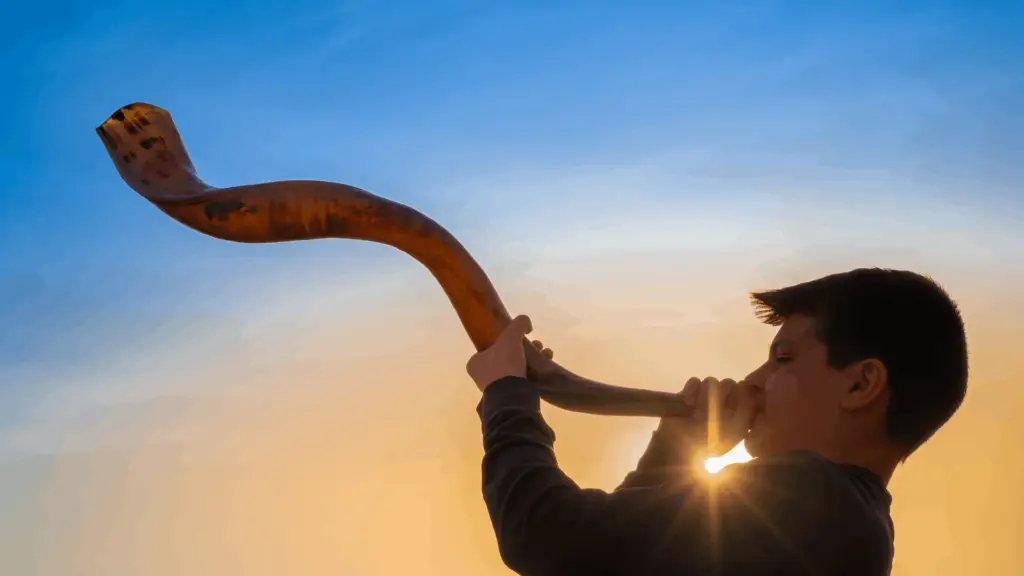
Maimonides famously described the sound of the shofar as a call to wake up: “Wake up, sleepers, from your sleep…” He then asks us to imagine both ourselves and the entire world as hanging in the balance, with a single action capable of tipping the scales.
The point is not that any of us can know the impact of one decision or one act. It is that we are asked to behave as though our choices matter. And if our choices matter, then what we know and what we see matter too.
Over the past three years, we have learned a great deal about the effects of prolonged trauma on individuals, families and communities. We know more about the role communities, schools, workplaces and people outside the traditional clinical system can play. We have seen the extraordinary creativity of civil society and the generosity and commitment of philanthropists.
But we have also seen the fragmentation that can emerge when hundreds of well-intentioned actors work independently. Once we see where people fall through the cracks, it becomes harder to accept those gaps as inevitable. Once we know that someone can spend weeks trying to understand where to turn for help, we cannot pretend navigation is a minor issue. Once we see extraordinary programs working in one community but inaccessible in another, we have to ask why. And once we understand that good intentions are not the same as good outcomes, we have to become more rigorous about quality.
We cannot separate that knowledge from the question of what we should do about it. Awareness creates responsibility. The shofar’s wake-up call is not only an invitation to pay attention. It is a reminder that seeing more clearly creates a responsibility to act differently.
And that raises the next question: what does responsibility look like now?
Responsibility Changes With Time
In the weeks and months after October 7, Israel did what Israel often does extraordinarily well in a crisis. People acted. They built solutions without waiting for someone to tell them whose job it was.
The question was necessarily immediate: What can I do right now?
That response mattered enormously. In an emergency, speed matters. We solve the problem in front of us. We fill the gap that has suddenly appeared. We build what is needed tomorrow because waiting for a perfect system may mean leaving someone without help today.
But an emergency response is built for an emergency.
Nearly three years later, the nature of our responsibility has to evolve.
Rabbi Jonathan Sacks described Rosh Hashana in terms of “the responsibility of humankind, and the impact of conscience on the future of the world.” I keep returning to that connection between responsibility and the future.
If we know more now than we did three years ago, responsibility cannot mean maintaining indefinitely everything that emerged in crisis. It means asking what should endure.
How do we make sure that finding the right support does not depend on whom someone happens to know? How do we create greater consistency in quality without losing the experimentation that produced important innovations? How do we connect strong local solutions to a wider system, and build something that can continue when urgency fades and philanthropic attention moves elsewhere?
These questions are quieter than the questions of October 2023. They do not carry the same sense of immediate heroism. But they may determine what remains after the emergency has passed.
The work now is to turn what was created in crisis into something responsible and sustainable, while preserving the generosity, creativity and willingness to act that made so much possible in the first place.
Perhaps that is what Rosh Hashana asks of us this year: not only to look back at the year that has passed or respond to what is urgent, but to take responsibility for what comes next and for the world we are helping to create.
Choosing Life
Throughout Rosh Hashana we ask to be remembered and inscribed for life. We hear an echo of this in Moshe’s final instructions to the Jewish people: “I have set before you life and death… choose life.”
After the years we have lived through, it is natural to hear those words first as a plea for survival.
May people live. May soldiers return safely. May the wounded heal. May families be spared another loss. Those prayers remain painfully immediate.
But choosing life cannot mean only breathing. Survival is not the same as recovery. To live is also to be able to sleep, to work and learn, to parent, to sustain relationships, to participate in a community, to experience pleasure without guilt, and to imagine a future and believe that you have a place in it.
Perhaps that is the full arc of what Rosh Hashana asks of us this year.
Rav Kook asks us to consider what kind of people we want to become. Maimonides reminds us that once we see more clearly, our choices matter. Rabbi Sacks asks us to understand responsibility in terms of the future we help create. And the Torah reminds us what that future is ultimately for.
To choose life.
Not only helping people survive what has happened, but building the conditions that allow individuals, families and communities to live fully again.
That is a much bigger project. It is also a much longer one.
May this new year give us the endurance to keep looking honestly, to keep learning, and to keep choosing life even when progress is slow and the urgency fades. And may it give us the will and imagination to build something better from all that we have learned.
Shana Tova.