
IGY began from a simple but urgent need: LGBTQ youth needed a place where they could gather, speak honestly, and be supported. More than two decades later, the organization has grown into a national youth and young-adult movement, but the original gap remains evident in its work. Young people still need places where they can be fully themselves, especially when home, school, community, or public discourse makes that difficult. IGY’s public materials describe it as Israel’s only LGBTQ youth and young adult movement, active from Kiryat Shmona to Eilat and founded in 2002. Yoni Avitan, who serves as co-CEO alongside Rom Ohayon, described IGY as an organization that has expanded from support groups into a broader ecosystem of social, emotional, educational, and employment-related support.
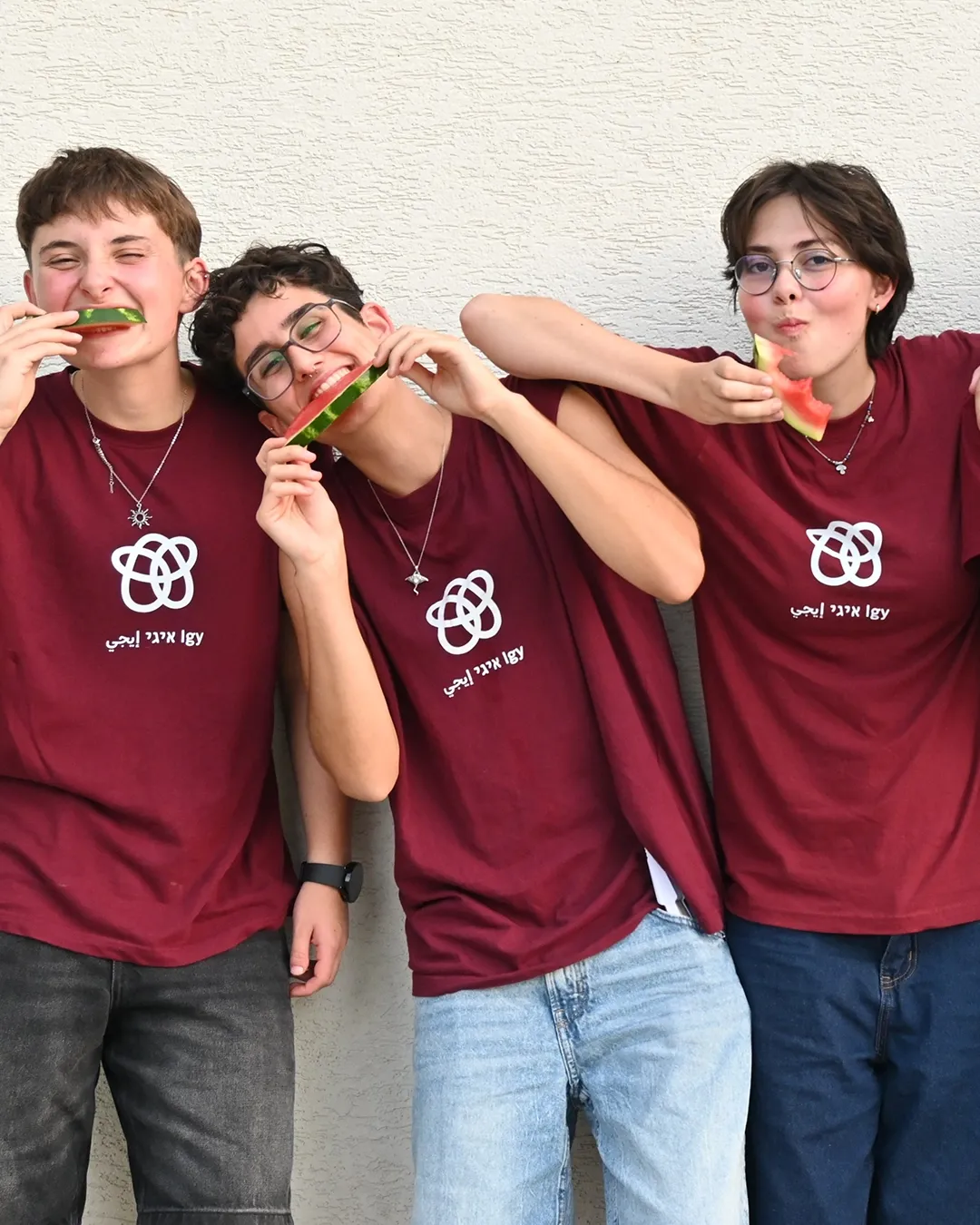
Avitan traced IGY’s development as a gradual widening of scope. “We started very much from the place of support groups for LGBTQ youth,” he said, but over time the organization came to understand that primary support was not an endpoint. It was a foundation. In his words, the initial support “allows us to build resilience,” respond to immediate distress, and create spaces where young people can experience their LGBTQ identity not only through rejection or pain, but also as “a source of strength” and belonging. That distinction runs through the organization’s model. IGY is not only trying to reduce harm. It is trying to help young people build a positive sense of self, community, and future.
In practice, IGY operates more than one hundred youth and young adult groups for ages 13 to 23, across approximately fifty local authorities, according to Avitan. These include general social groups as well as groups shaped around particular identities or contexts, including religious youth, those leaving ultra-Orthodox communities, trans youth, and Arab society. The work is intentionally local and relational. Youth encounter the organization through group leaders, social activities, peer community, and, when needed, psychosocial support. Avitan described a system in which the first point of contact is often not a clinician, but a guide or volunteer who sees distress early and can help connect a young person to the right next layer of support.
That psychosocial layer has become increasingly central. IGY has an in-house team of five social workers, according to Avitan, who train and accompany staff and volunteers, lead resilience workshops, support groups directly, intervene with families when needed, and help connect participants to subsidized treatment or short-term guidance processes. But Avitan emphasized that IGY’s therapeutic role should not be understood only through the lens of referral outward. IGY continues to hold a careful balance between being an educational youth movement and a therapeutic-supportive organization. At the same time, many of the young people, young adults, and parents who turn to IGY do not necessarily want to be referred elsewhere. They want to receive support, including therapy, within IGY itself, because they already know the organization, feel a sense of belonging there, and often have limited trust in municipal, state, or other formal systems. After October 7, both the need and the sense of insecurity grew, making subsidized in-house therapy even more important. With philanthropic support, IGY expanded these subsidized therapeutic responses, and sees this as an area it hopes to continue growing.
This expansion also includes families. In response to a growing need among parents for guidance and support of their own, IGY launched a parent network this year with support from the National Insurance Institute’s Funds Division. The network includes a Facebook group for content and consultation, professional webinars, and family-oriented therapeutic interventions, including parent guidance. In that sense, IGY’s clinical layer has expanded beyond youth and young adults alone, and now increasingly supports families as part of the broader ecosystem surrounding LGBTQ young people.
One distinctive part of IGY’s model is the way it connects belonging, practical life skills, and emotional support. Avitan described Merkaz Marsha, an occupational college for LGBTQ young adults in risk situations, which he described as unique “as far as we know” in providing vocational training specifically for LGBTQ young adults. Participants may arrive without a matriculation certificate, without family backing, or from situations involving prostitution, homelessness, or other forms of instability. The college offers practical training, in fields such as digital marketing, hair design, makeup, production, bookkeeping, and fitness instruction, alongside social and emotional support. IGY also accompanies graduates after training and has developed employment incubators, including spaces such as a gym studio and a salon where graduates can begin working with clients.
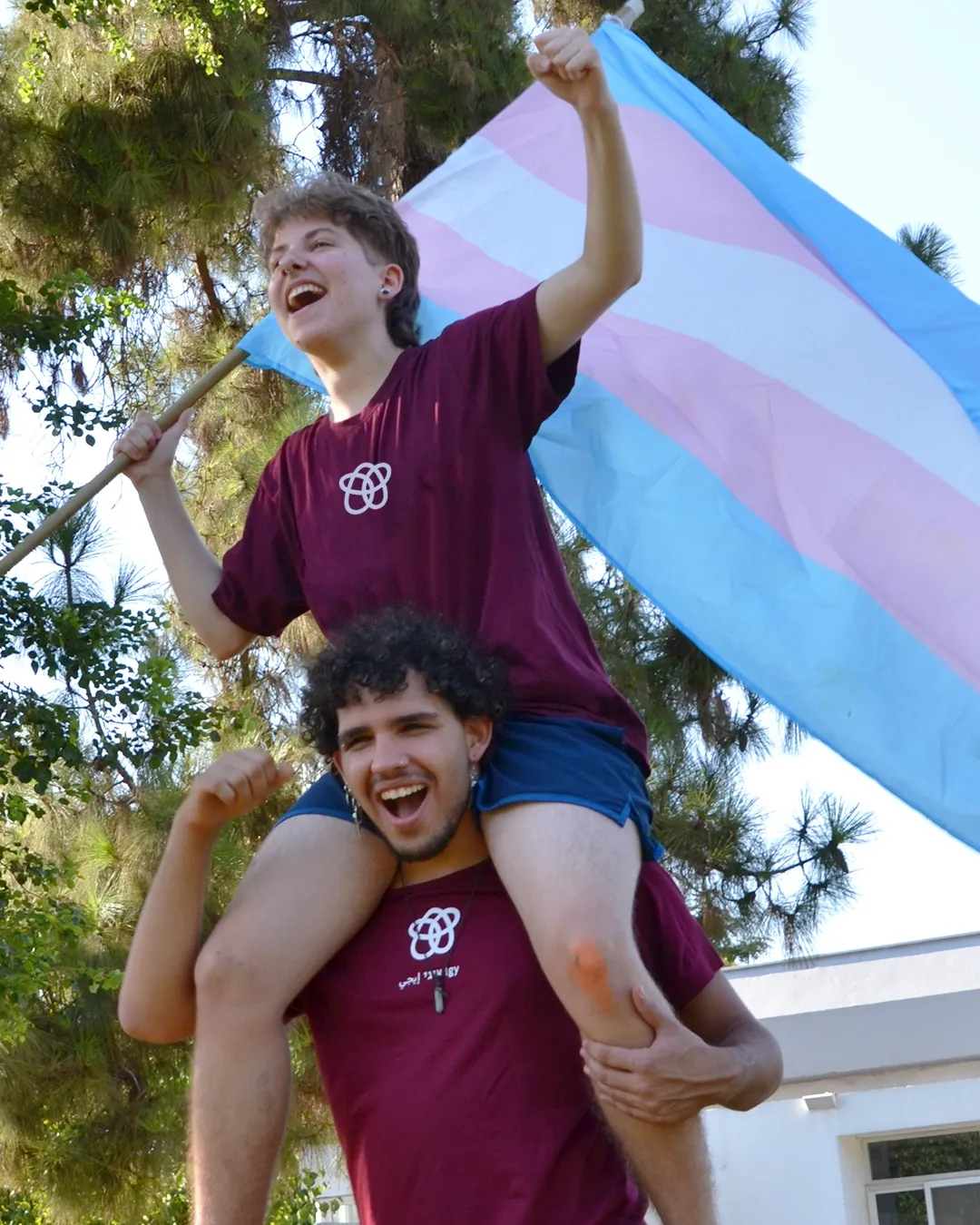
IGY also described itself as an organization that studies its own field. Avitan said the organization has an in-house research institute that evaluates internal activity and conducts broader climate studies, including recurring studies on LGBTQ youth in Israeli schools and research on LGBTQ young adults in the army. He emphasized that the goal is not only to understand what happens inside IGY, but to produce data about LGBTQ youth and young adults in Israel, a population he said is not sufficiently studied by others. This research function appears to be part of the organization’s broader contribution to the ecosystem: not only providing services, but helping make the needs of LGBTQ youth more visible and evidence-based.
October 7 intensified the needs IGY was already seeing. Some participants were directly affected by the attacks and the war: young people from the Gaza envelope, Sderot, and Kiryat Shmona; evacuees; relatives of hostages; and young people who lost family members or friends. In that sense, Avitan said, IGY’s youth were facing many of the same traumatic realities as other Israeli teenagers. But the war also created specific pressures for LGBTQ youth. Some were stuck at home or in hotels without privacy or safety to express who they are or join supportive activities. For youth already keeping a secret, displacement and confinement deepened distress.
Avitan also pointed to a rise in LGBTQ-phobic hostility during the war. He described a broader dynamic in which minorities can face suspicion, hatred, or “loyalty tests” during national crises. In IGY’s case, he said some LGBTQ youth were treated as if being queer made them less Israeli, less Zionist, or politically suspect. He gave examples of youth in Ashdod and Ashkelon being called “Hamasniks,” despite experiencing the same war as their peers. The result was not only increased emotional need, but a need for support that understands the intersection between national trauma, minority stress, family dynamics, and identity-based hostility.
The conversation also surfaced IGY’s constraints. Avitan named a central strategic question: how does an organization respond to urgent emotional needs while building something it can sustain over time? “We need to think not only how we respond to the situation,” he said, “but where we want to go.” For IGY, that means continuing to define the right balance between educational, community-based, psychosocial, and therapeutic work. The need for LGBTQ-affirming, subsidized treatment is real, and IGY’s experience suggests that for many young people and families, receiving this support inside a trusted community organization is not incidental. It is part of what makes the support accessible. At the same time, expanding in-house treatment requires major investment, staff, infrastructure, and long-term commitment. The strategic question, then, is not whether the need belongs in the field, but how IGY and its partners can build the right model to meet it responsibly.
Another challenge is staff and volunteer sustainability. IGY relies on salaried staff and hundreds of volunteers, many of whom meet complex emotional and family situations through youth work. Avitan noted that volunteers may understand, in theory, that they will encounter difficult issues, but the experience can be harder once they are actually facing them. The organization is therefore asking how to better train, accompany, and retain people working at the edge between social education and emotional support. “How do people who are not therapists meet issues that are, in the deepest sense, therapeutic?” he asked.
What IGY hopes to bring to the broader field is closely tied to these questions. It brings deep experience in building identity-based community, reaching youth across geography and subgroups, integrating psychosocial support into social frameworks, and generating knowledge about LGBTQ youth in Israel. It also brings humility about boundaries. The organization is not claiming it can do everything. Rather, it is asking what can be done well inside a youth movement, what can be held in-house, what requires partnership with external providers, and how trusted community organizations can make therapeutic support more accessible to populations that may not turn easily to formal systems.