
In the first days after October 7, Yael Goodman walked through Jerusalem hotels looking for people who needed to run.
The hotels were filled with evacuees, families and communities suddenly pulled out of ordinary life and placed into a waiting room of uncertainty. Volunteers were everywhere, organizing food, clothing, transportation, and supplies. Goodman wanted to help too, but she kept returning to one question: what could she offer that was truly hers?
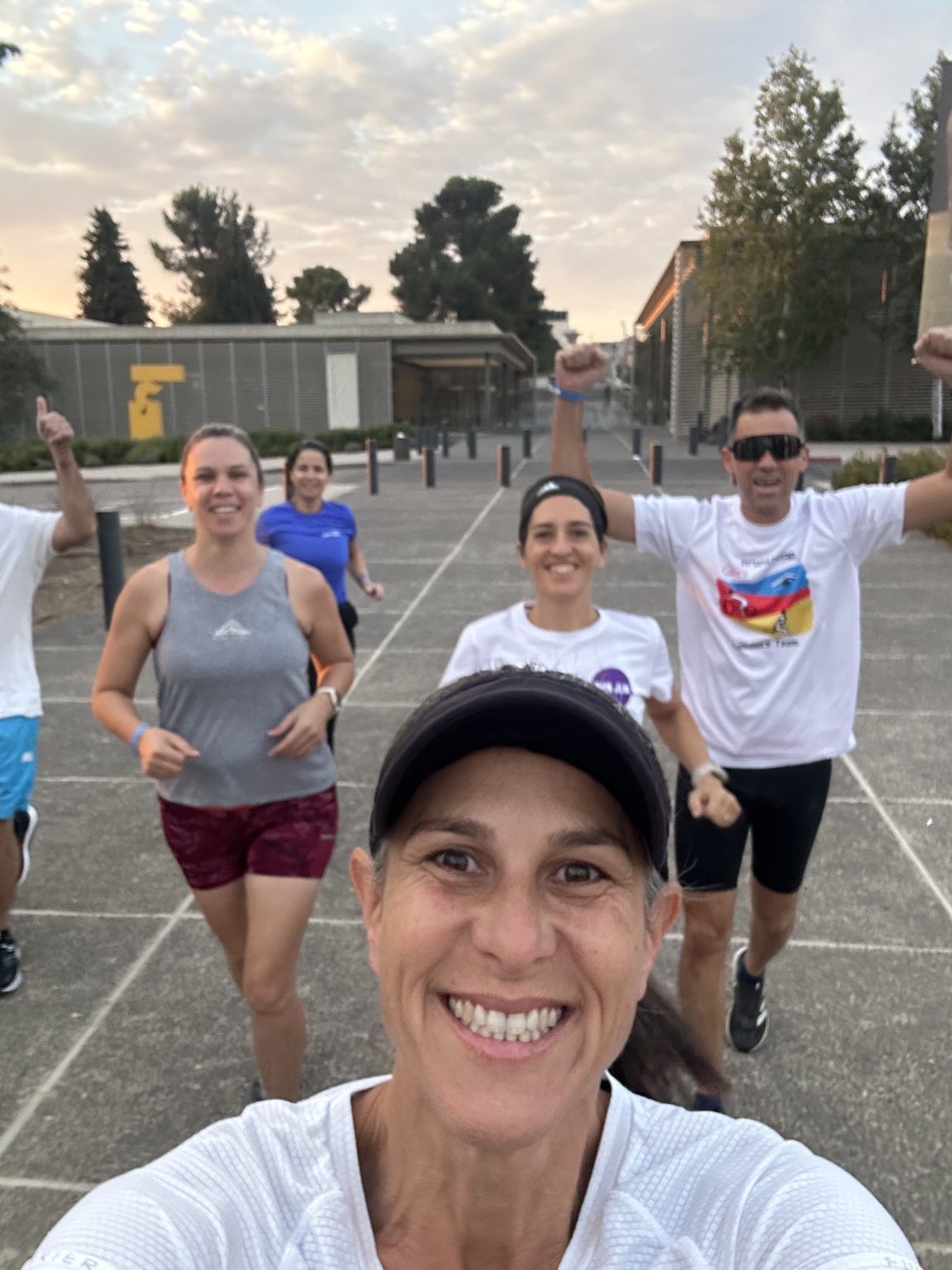
“Everyone knows how to make food, sandwiches, or donate socks,” she recalled. “I said: wait, running. Running saves me.”
Goodman is a Jerusalem tour guide, the founder of running tours in the city, and a longtime member of Israel’s running community. So she began doing what she knew. She went from hotel to hotel, looking for runners among the evacuees. At first, the clues were simple: a pair of shoes, a person who looked like they might be ready to step outside. Soon she realized that many people did not have the basic equipment they needed. She wrote to relatives abroad and raised ₪70,000 within two weeks.
“I was walking around like some kind of Santa Claus of running shoes,” Goodman said, “simply handing out the infrastructure so they could go out and run.”
That spontaneous act that Goodman called “running therapy” became Ritza Lanefesh, “Running for the Soul,” a community-based initiative operating under Keren Tani, the nonprofit founded in memory of Goodman’s brother, Netanel “Tani” Goodman. Tani was killed in a tragic accident in 2002, at age 17. After his death, his family created Keren Tani around the values that had animated his life: volunteering, sport, and community.
For Goodman, the connection between the earlier family loss and the post-October 7 initiative is not incidental. “Keren Tani is a fund that was born out of pain,” she said, “and we grew from that pain and harnessed it into something good.” The same idea now shapes her work with people carrying new forms of grief, fear, displacement, and trauma.
As she put it, “You went through pain; let’s harness it into something good.”
At the beginning, Goodman thought the need was shoes. Then a group of women from Sderot taught her otherwise. She had been running with them while they were evacuated. When they returned home and stopped running, she asked why. Their answer was brief: “Because you’re not there.”
“That’s when I understood that they needed an anchor and a coach,” Goodman said. “The fact that they have shoes and running skirts is beautiful, but alone they won’t do it.”
That realization became the heart of Ritza Lanefesh’s model. The organization creates weekly running communities for people who share a lived experience: reservists, spouses of reservists, wives of wounded soldiers, Gaza Envelope residents, northern communities under fire, and other highly specific groups. Each group is led by a certified running coach. The run itself is the intervention.
Goodman is careful about this distinction. Ritza Lanefesh is not formal therapy, and the coaches are not asked to become therapists. But she believes running contains many of the elements people often seek in healing spaces: routine, movement, mindfulness, nature, achievement, informal conversation, and belonging.
“Ritza Lanefesh is a meeting once a week with a certified running coach, where running is the treatment,” she said. “No social worker comes afterward to talk to them. No. It’s the beer, it’s the meeting, it’s going out. All the elements and ingredients of treatment are inside the running.”
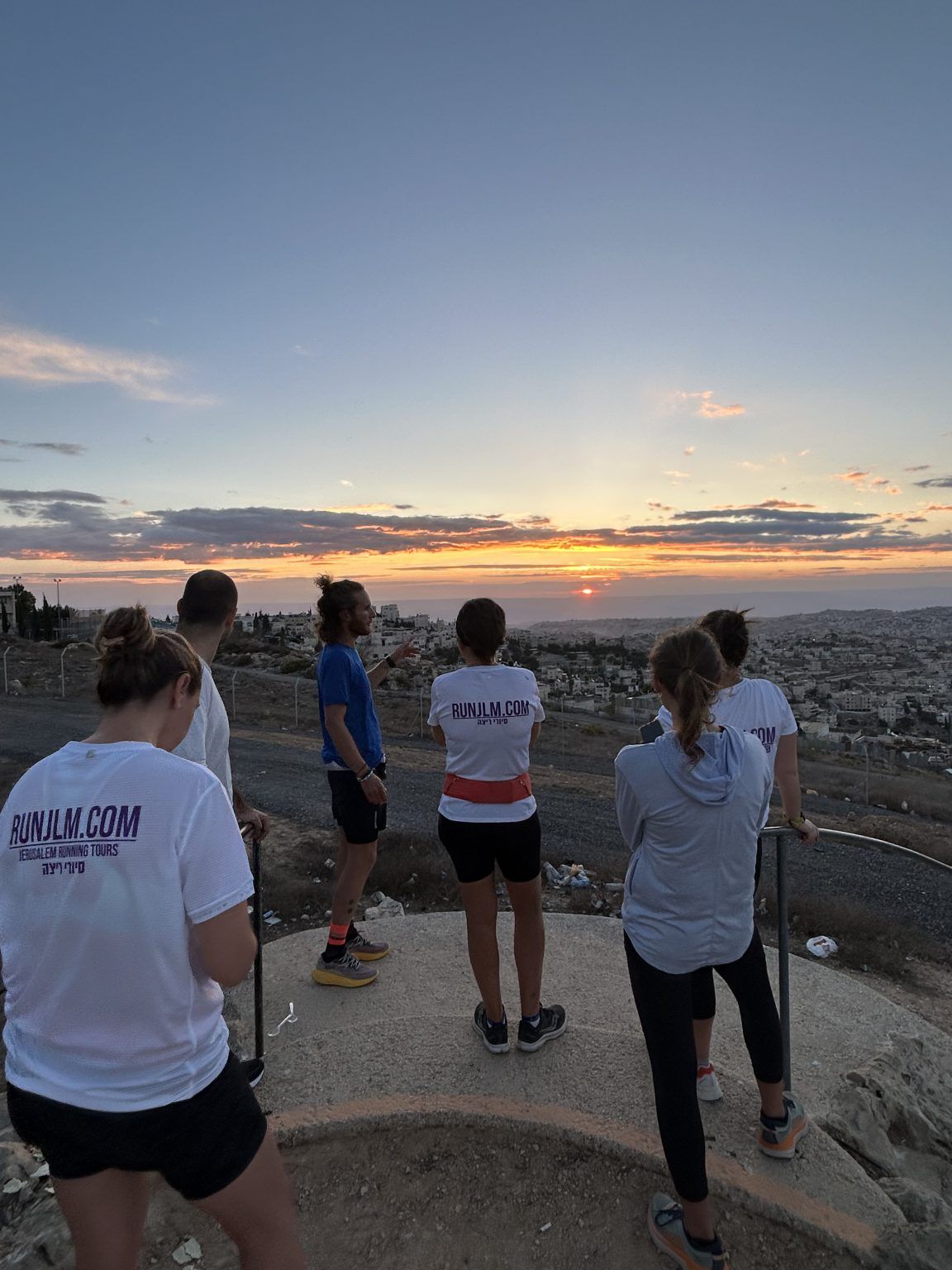
She calls it “informal therapy,” the kind of care that happens without announcing itself as care. “You go through treatment without knowing you’re going through treatment.”
That informality does not mean the work is casual. Today, Ritza Lanefesh operates around 16 running communities across Israel. Some have roughly 30 people on paper. Others are intentionally small. Goodman does not judge impact only by scale. “If I have seven people in a group,” she said, “for me those are seven people in treatment.”
The precision of each group matters. Goodman believes people heal differently when they are surrounded by others who immediately understand something essential about their experience. One reservist described it simply: “We speak with our eyes.”
In that kind of space, less needs to be explained. A wife of a wounded soldier can speak about bureaucracy and invisible injury with women who understand both. Gaza Envelope residents can run beside others whose homes and communities were also transformed by October 7. In one group, members of Sa’ad and Alumim, and Nirim kibbutzim who rarely met before the war, now run together. “It’s wow,” Goodman said.
The community also creates a quiet safety net. Coaches are expected to notice when someone stops coming. Participants often check on each other first. “If you are hiding, you are waiting for someone to find you,” Goodman said. “That is exactly it. We are looking for you.”
The next stage for Ritza Lanefesh is about strengthening what began in urgency. Goodman has paused some expansion so she can build systems: coach protocols, attendance tracking, contracts, documentation, and a clearer organizational structure. She is also seeking support for a six-month coach training program with expert lecturers from the Wingate Institute, designed to give coaches trauma-informed knowledge, as well as to build 2 communities per month in the upcoming year. Research is also beginning. The organization is working with a doctoral researcher from the University of Haifa on a study examining the mental-health impact of running, with plans for questionnaires, deeper study of one community, and longitudinal follow-up.
For Goodman, the work is no longer only about October 7. “While October 7 was definitely the catalyst,” she said, ” She envisions expanding to create groups for widows, bereaved families, people living with anxiety or depression, underserved communities, schools, and even Jewish communities overseas.
“Running connects people,” she said. “It doesn’t matter where you come from.”
Ritza Lanefesh began with a woman looking for recognizing signs of runners in a hotel lobby. It has become a reminder that healing does not always begin with words.
Sometimes it begins with breath, motion, a coach waiting at the starting point, and a group of people who know why you came, even before you say anything.