Nafas.ai began with a moment of not knowing.
Rabea Shamaly was working as an AI engineer after completing his studies at the Technion when he woke up one morning unable to get out of bed. His body hurt, he was exhausted, and everything felt grey. At first, he assumed he had COVID. Only after the symptoms returned did a friend suggest speaking with a therapist.
“The treatment was the best gift I ever received,” he recalled. “It simply changed my life.”
But his closest friend, Ahmad, was struggling silently with even more severe symptoms. He had difficulty finding professional support that felt culturally relevant, accessible, and affordable. The silent struggle became so overwhelming that one day he sat down at his desk and wrote a goodbye letter. Fortunately, Ahmad did not act on it.
For Shamaly, that moment crystallized a question that had already been forming: what could have helped Ahmad earlier, before reaching that point? He wished he had something he could give him – something discreet and safe enough to use privately, that could help him understand what was happening and find a direction toward the right kind of support.
Ahmad’s experience was not an isolated one. In an article on suicidality in Arab society, Prof. Sami Hamdan cited recent studies finding that more than 30 percent of Arab adolescents reported injuring themselves repeatedly, while suicidal thoughts were present among roughly one-third of Arab young people. The figures point to a wider level of distress, particularly among young people, that often remains difficult to name or discuss.
That question became the starting point for Nafas.ai, a technology-enabled mental-health platform designed for Arab communities. Shamaly describes its purpose as building a bridge between Arab society and the worlds of mental health, healing, growth, and professional support.
The gap it addresses is not simply a shortage of therapy. It often begins much earlier, when people sense that something is wrong but cannot name it, do not know where to turn, or do not see the available services as relevant, affordable, or appropriate for them.
Research conducted with Dr. Farida Aburass challenged one of Shamaly’s original assumptions. “Stigma is not the biggest barrier,” he explained. Their work suggested that a major obstacle was the difficulty of finding a professional who understands a person’s background, speaks their language, is available, and charges an affordable price.
This distinction matters because awareness campaigns alone cannot solve a navigation or access problem. Reducing stigma may make someone more willing to seek help, but willingness has limited value when appropriate support remains difficult to understand, trust, afford, or find.
At the same time, Nafas.ai’s conversations with community members highlighted how long it can take for people to recognize emotional distress and understand what kind of support might help. Shamaly’s own experience illustrates the problem: he initially interpreted his physical pain and exhaustion as a viral illness. Others may live with sleeplessness, anxiety, withdrawal, anger, or persistent stress without immediately recognizing these experiences as signs that they may need support.
Psychoeducation is therefore one part of Nafas.ai’s approach. Before someone can decide what kind of help is relevant, they may first need language for what is happening in their body and mind. They may also need to encounter mental health in ordinary, recognizable terms rather than only through the language of diagnosis or crisis.
The process does not assume that recognition should immediately lead someone into one-on-one therapy. Awareness, readiness, and access are different stages. Nafas.ai aims to meet people earlier—including when they are sitting privately in their own rooms and beginning to wonder what is happening to them—and help them gain clarity, explore their experience, and identify a next step that feels possible.
Nafas.ai organizes this pathway around three ideas: clarity, direction, and connection.
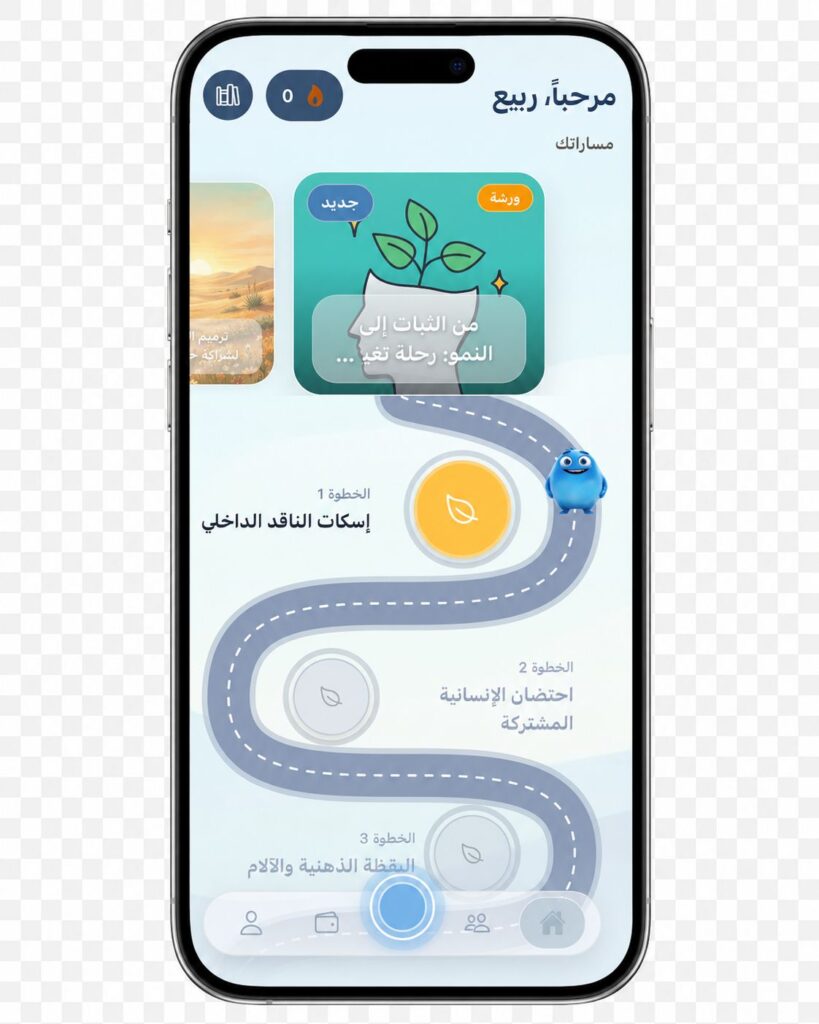
The first step is a private digital conversation intended to help users describe and make sense of what they are experiencing. From there, the platform guides them through personalized reflections, practices, and experiences designed to help them understand themselves, build emotional skills, and explore what may help next. Shamaly has compared the experience to a Duolingo-style journey—not for learning another language, but for learning more about oneself.
Connection then opens a pathway toward the support that fits the person’s needs and readiness. That might include a professional, a workshop, a group experience, or another guided intervention.
The application is not intended to replace human care. “An app alone is not enough,” Shamaly emphasized. Nafas.ai is intentionally designed as a bridge between digital guidance and real-world human support and experiences. The digital layer can help someone prepare before an intervention, reflect afterward, and continue integrating what they learned rather than leaving each experience as an isolated event.
Cultural adaptation is central to the model. During the conversation, Raghad Zeidan noted that a therapist elsewhere in the Arab world may speak Arabic but still not understand the particular experiences and mixed identities of Arab citizens of Israel. Shamaly agreed, observing that some users move between Arabic and Hebrew even when speaking about emotions. Translation, in other words, is not the same as cultural understanding.
The team has also reconsidered the language through which people first encounter support.
“Not everyone feels comfortable with the idea of therapy, but almost everyone wants to develop and grow,” Shamaly said.
This is more than a communications decision. Nafas.ai increasingly uses familiar entry points such as personal development, stress management, emotional regulation, leadership, and growth—not to disguise mental health, but to meet people in language and experiences that already feel relevant to their lives.
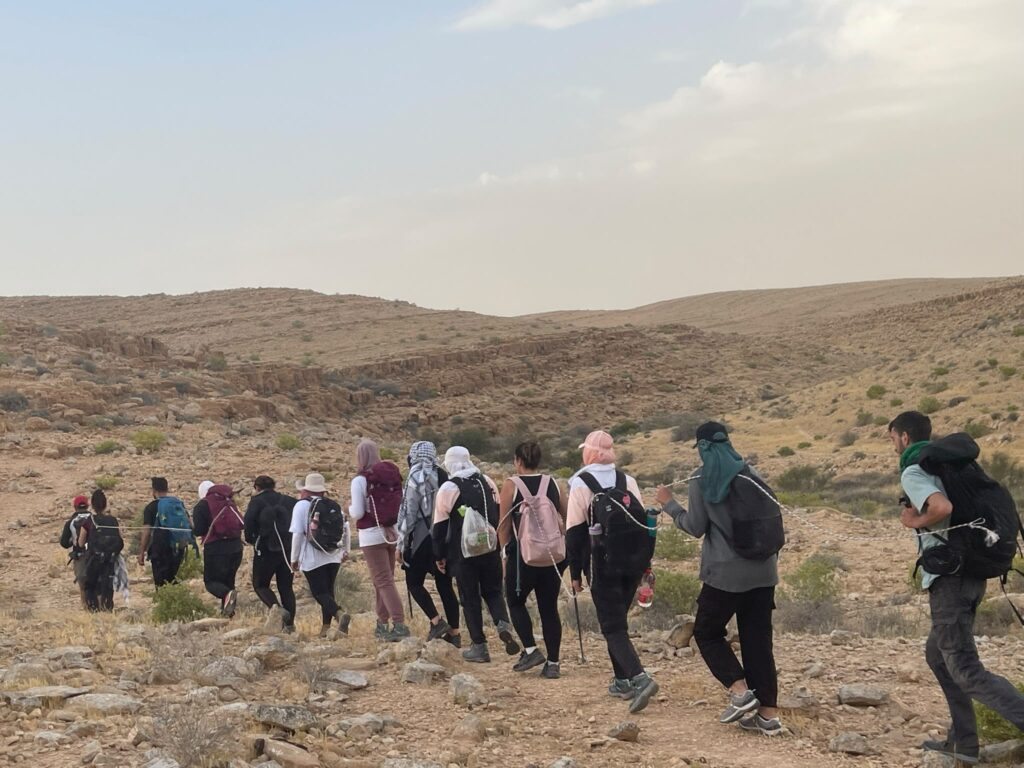
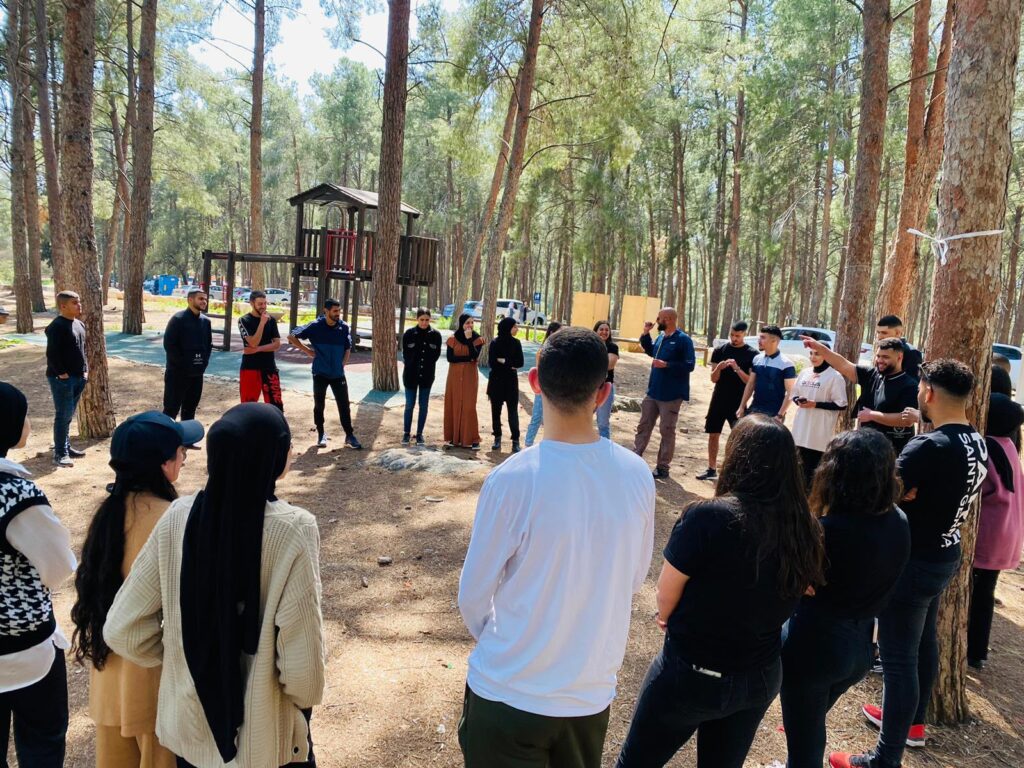
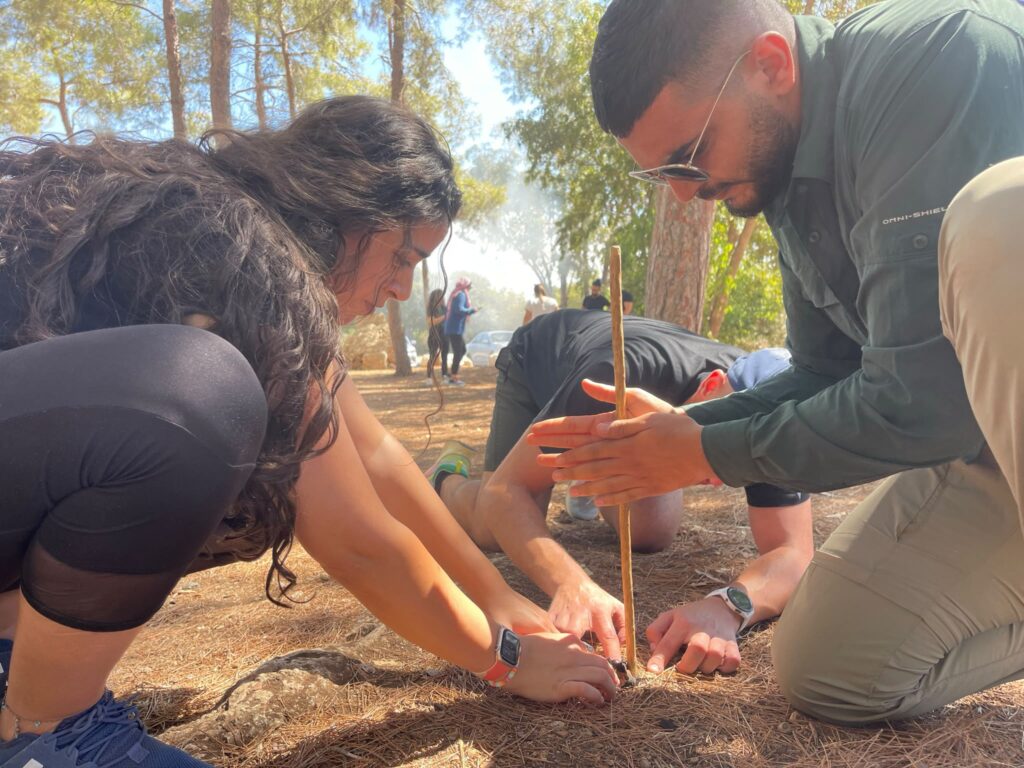
That thinking also extends into Nafas.ai’s adventure-based experiences in nature.
Shamaly described one participant who injured his shoulder during a climbing exercise but remained silent because he did not want to inconvenience the group. During the reflection afterward, the facilitator asked why he had chosen not to tell anyone about the injury. Only then did the participant begin to recognize a deeper pattern: he was afraid of being perceived as a burden, and because of that fear, he rarely asked others for help. That realization ultimately contributed to his decision to begin therapy.
The value of the experience was not that the facilitator diagnosed the pattern for him. The challenge created a real situation in which the pattern could become visible to the participant himself.
Nafas.ai sees these experiences and the digital platform as different touchpoints within the same broader pathway. Depending on a person’s needs and readiness, the next meaningful step might be an individual therapist, a workshop, group support, an experiential program, or another form of guided support.
This flexibility also responds to a practical constraint. If the supply of culturally relevant therapists is limited, one-on-one therapy cannot be the only destination. Nafas.ai is therefore exploring group and one-to-many formats while remaining attentive to privacy, quality, and trust.
Nafas.ai has completed two early pilots. Among participants who completed the tested pathways, measured stress decreased by approximately one-third on average. Stress was the only outcome measured at that stage, and Shamaly is careful not to claim that the early results establish more than they do.
“I cannot say one hundred percent that we cracked the code,” he said. “I cannot say we solved all the problems. But one thing I know: I know a lot about the problem, and I’m willing to do anything to solve it.”
Nafas.ai is now moving from early pilots into real-world implementation. It is working with The Joint, the Economic Development Authority, and the Rothschild Foundation, to bring Nafas’s services into the Arab community, beginning in Jisr a-Zarqa.
The next stage requires more opportunities to test and refine the model in real settings: organizational partnerships, resources to develop the technology and surrounding programs, and further opportunities to validate what works across different communities and contexts.
Nafas.ai also recognizes that no single organization can create a complete pathway into mental health and growth. Providers, municipalities, community organizations, clinicians, technologists, funders, and public institutions all hold different pieces of the system. Part of the challenge is making those pieces work together in a way that feels coherent from the perspective of the person seeking support.
Nafas.ai ultimately hopes to contribute more than an application. Its broader ambition is to help build Arab-led pathways into mental health, healing, and human development that are grounded in the community’s languages, identities, and lived realities.
Its underlying insight is simple: people cannot benefit from support they cannot understand, trust, afford, or find. A more accessible system must meet people before the treatment room—helping them understand what they are experiencing, discover what might help, and take a next step that feels possible.