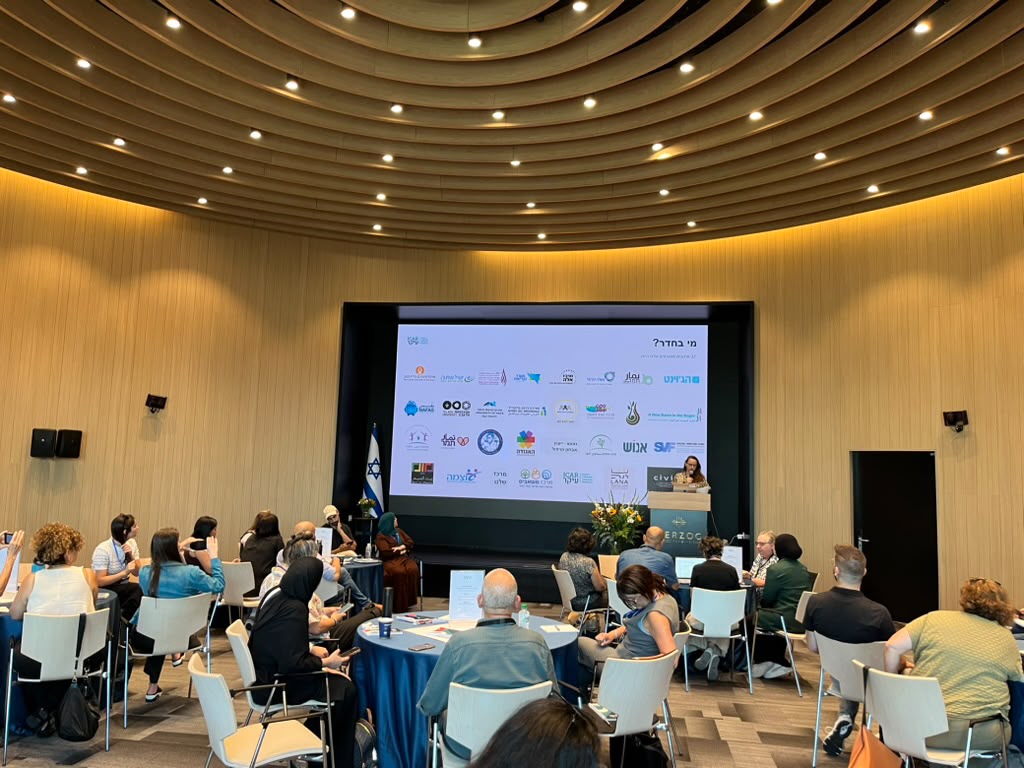
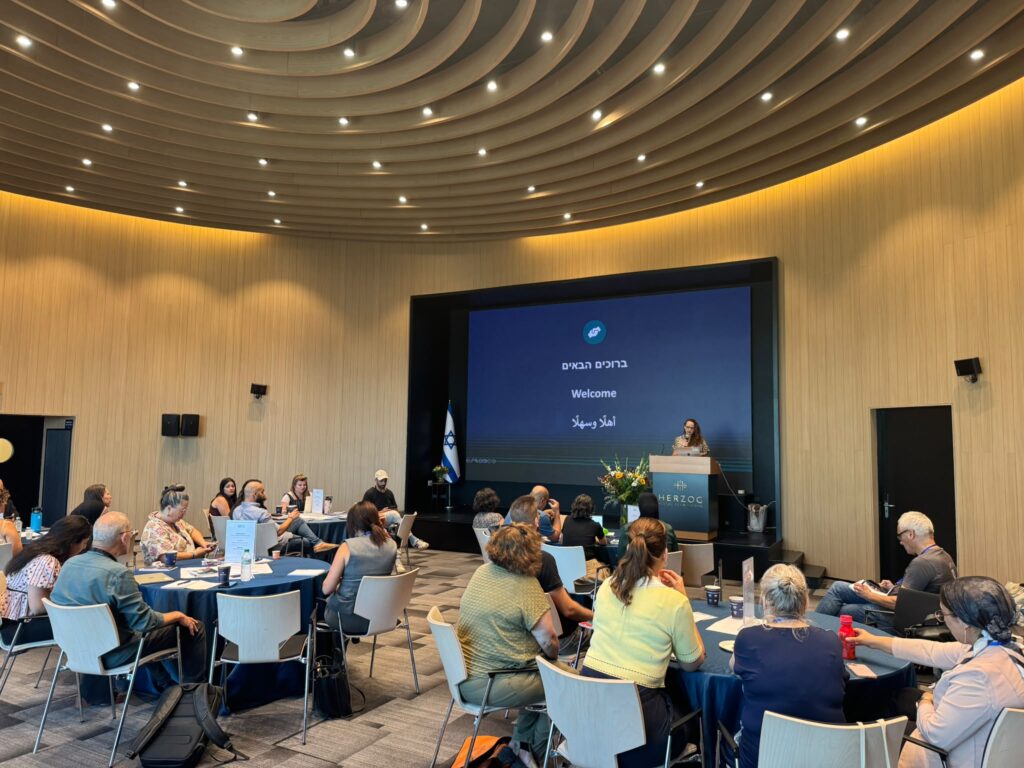
On July 20, 2026, representatives of 32 organizations gathered for an ICAR Collective roundtable on mental health support in Arab society in Israel. Participants came from across the system: health funds, local authorities, schools, clinical practice, academia, civil society, community organizations, philanthropy, and social innovation, bringing different perspectives on where people encounter barriers to care.
We had spent a long time preparing for this day. Through ICAR’s mapping, conversations with people working in the field, and the material we had gathered ahead of the roundtable, one thing had become increasingly clear: the problem was not simply that mental health services were missing.
In many cases, something already existed. A service. A professional. A local organization. A school counselor. A family doctor. A community figure people trusted.
What was often missing was the connection between them.
That became tangible very quickly in the room. Between sessions, people exchanged contact details, compared what they were working on, and discovered that others were dealing with another part of the same challenge. For me, that was one of the clearest expressions of why we had brought everyone together in the first place.
The question was not whether mental health needs in Arab society are significant. No one in the room needed convincing of that. The harder question was this: if services, professionals, and community resources already exist, why are people still getting lost before they reach support that works for them?
A Journey With Six Places to Fall Through
We opened the roundtable with a different way of looking at access to mental health support.
Instead of asking only whether a service exists, we looked at the full journey a person may have to make: recognizing that something is wrong, deciding to seek help, finding the right service, staying engaged with it, receiving support that actually fits, and having a system capable of noticing when someone has fallen out along the way.
There were six points where that journey could break down.
That framing mattered because it made it difficult to fall back on one simple explanation. Stigma matters. So do shortages of professionals, cost, geography, long waiting times, language, trust, and cultural fit. But none of them explains the whole journey.
A person may get through one barrier only to meet another at the next step.
And that means adding one more service, on its own, does not necessarily solve the problem.
The Journey Begins Before Someone Asks for Help
A recurring theme in the discussions was how much can happen before someone ever reaches a formal mental health service.
A person does not necessarily say, “I am experiencing emotional distress.” They may say they cannot sleep. They may have headaches or physical pain, withdraw from family life, become angry, or simply stop functioning as they usually do.
That sounds obvious when written down. In practice, it raises a much harder question: do people have language that helps them understand what they are experiencing?
Several discussions returned to the difference between translating mental health terminology into Arabic and actually making mental health information meaningful in people’s lives.
Those are not the same thing.
Participants also spoke about the importance of context within Arab society itself. The language people use, family and religious frameworks, geography, gender, and expectations around privacy or independence can vary across communities and individuals. Those differences can influence how distress is understood, how it is expressed, and what makes seeking help feel possible or acceptable.
That is why cultural adaptation cannot happen at the end of the process, after a service has already been designed. It has to influence the way we talk about distress, the questions we ask, the role we give families, and the way a first encounter with a service feels.
The same is true for the people around someone experiencing distress. Teachers, family doctors, religious leaders, youth workers, relatives, and local professionals may notice a change long before a mental health professional does.
They can be an important first point of contact. But we were careful about something else too: they should not be turned into substitute therapists. If we train more people to recognize distress, there has to be somewhere reliable for them to turn next.
Otherwise, we become better at identifying a need without becoming better at responding to it.
Reaching a Service Is Not the Same as Receiving Care
The conversations also pushed us beyond another familiar explanation: that people do not seek mental health support mainly because of stigma.
Stigma was certainly part of the discussion. Participants spoke about concerns around privacy, family reactions, marriage, employment, and social standing.
But distrust does not come only from attitudes within a community. Sometimes the system gives people good reasons to hesitate.
If it is difficult to understand what a service offers, if waiting times are long, if information is outdated, if a person has to travel far, pay privately, or tell their story again and again, trust can disappear quickly.
And even reaching a clinician does not necessarily mean reaching the right care.
One distinction that came up repeatedly was between Arabic-speaking care and culturally appropriate care. They overlap, but they are not interchangeable. A clinician may speak Arabic and still not understand the family, religious, social, or local context shaping the person’s experience. At the same time, the shortage of Arabic-speaking professionals means that even linguistic access cannot be taken for granted.
Then there is continuity.
A person may finally ask for help, receive a referral, and still never make it into the next service. The waiting period may be too long. The service may not be appropriate. Nobody may follow up.
Too often, the person already experiencing distress, or a relative or professional trying to help them, becomes the one responsible for holding the pieces together.
Responsibility Is Fragmented at the Seams
This became one of the strongest threads across the six tables.
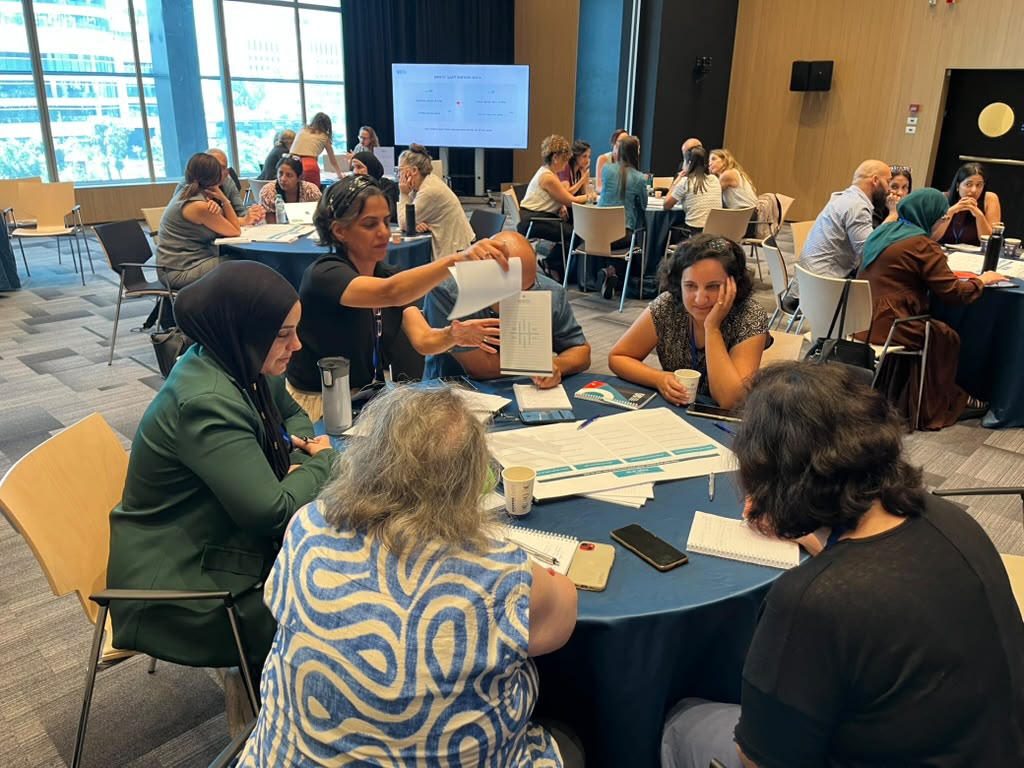
Each table began at a different point in the journey. In the first working session, every group identified three root causes behind its failure point and developed a proposed response to each one. By the end of the session, the room had produced 18 proposed solutions.
What interested me was how much overlap appeared between tables that had started from very different problems.
Again and again, people came back to trusted community actors, clearer routes into care, better information, cultural adaptation, coordination, and responsibility across transitions.
There were disagreements, as there should have been. Who should coordinate? Should responsibility sit with health funds, local authorities, or another part of the system? Where should resources go first?
But beneath those questions was a shared concern: a person’s continuity of care cannot depend on goodwill and personal relationships alone.
A teacher or religious leader may help someone take the first step. A community organization may know exactly which service could help. A family doctor may make the referral.
But someone still has to make sure the person reaches the next step.
That responsibility cannot disappear the moment a referral is sent.
From 18 Ideas to Three Areas for Action
The second working session was where the day began to narrow.
The original plan had been to vote on individual solutions. In practice, participants saw that many of the 18 proposals belonged together. Rather than treating them as isolated ideas, they grouped them into three broader areas and formed new tables to develop each one further.
The first focused on building trusted pathways from the community into care. That included culturally grounded psychoeducation, working through people and institutions that already have community trust, and making the first encounter with formal services clearer, safer, and more responsive.
The second focused on helping people and professionals find the right support. Participants explored the idea of a two-sided digital interface that could give people clear, verified information while also helping family doctors, social workers, educators, and other referrers navigate available services and make better referrals.
The third focused on continuity and accountability between services: what happens after a referral, who remains responsible while someone is waiting, and how responsibility should move when several systems are involved.
By the end of the day, these areas had become clearer directions for further development, rather than fully formed programs. Instead of leaving with another long list of problems, we left with three areas that people from different sectors could continue developing together.
Since the roundtable, ICAR has taken those areas and developed them further into proposed action pathways. The next step is to bring the right partners around each one, build on work that already exists, and identify what can realistically be tested and advanced.
For me, that is the point of the roundtable.
A single meeting cannot repair a fragmented mental health system. But it can change the way we approach the problem. We began the day with six different places where people are being lost. We ended it with three areas around which people were willing to keep working together.
The next step is to turn those three areas into practical changes that make it easier for people to find, reach, and stay connected to the support they need.
We invite organizations, professionals, community leaders, public institutions, and others with relevant experience, resources, or authority to join the next phase of this work and help turn these directions into practical solutions.