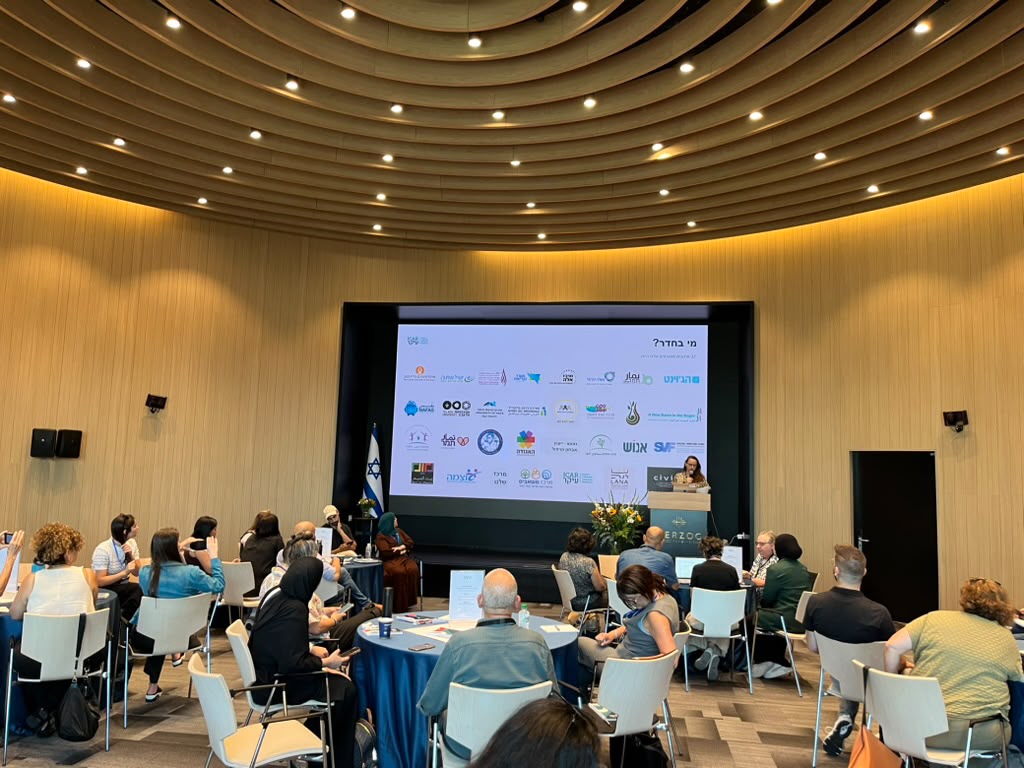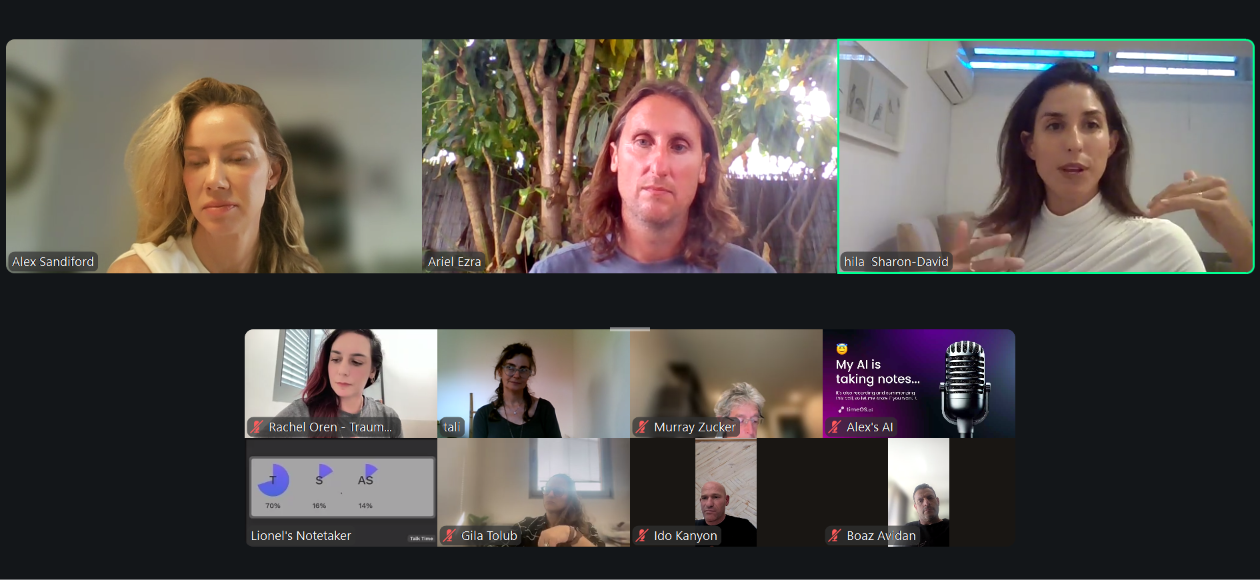
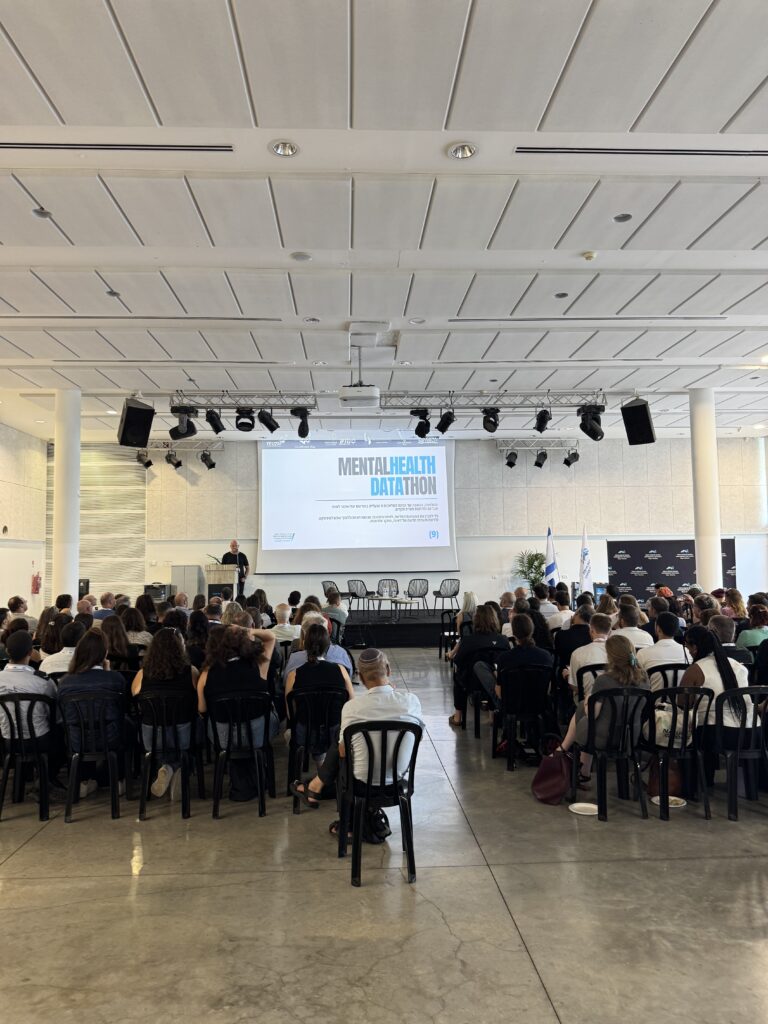
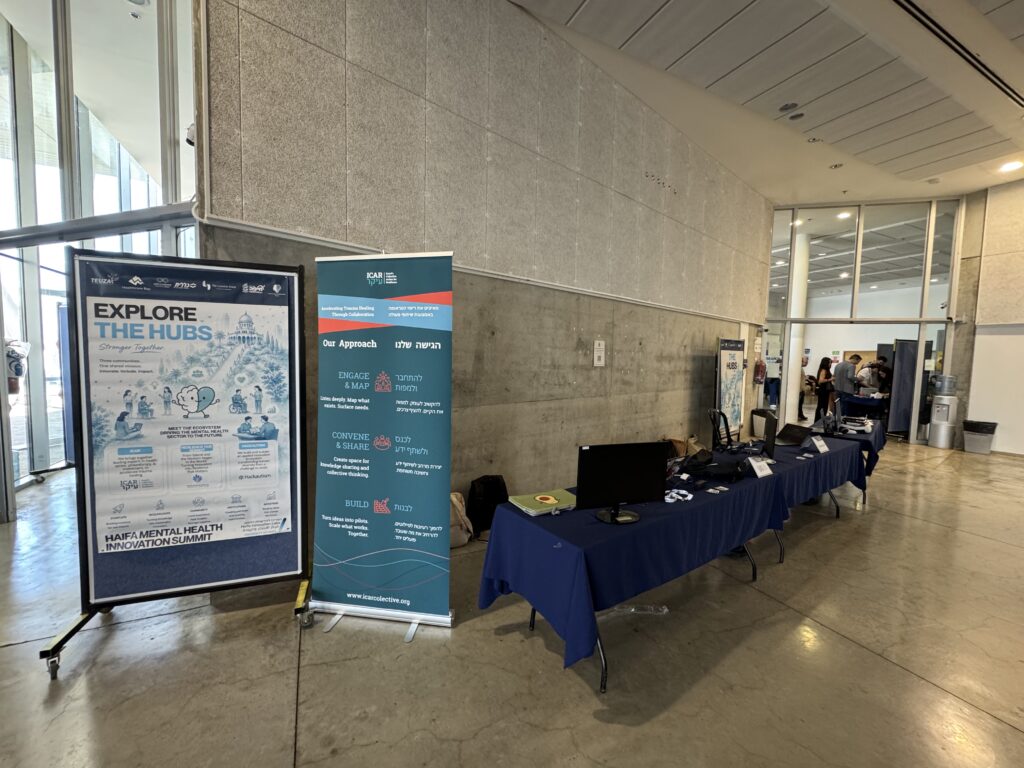
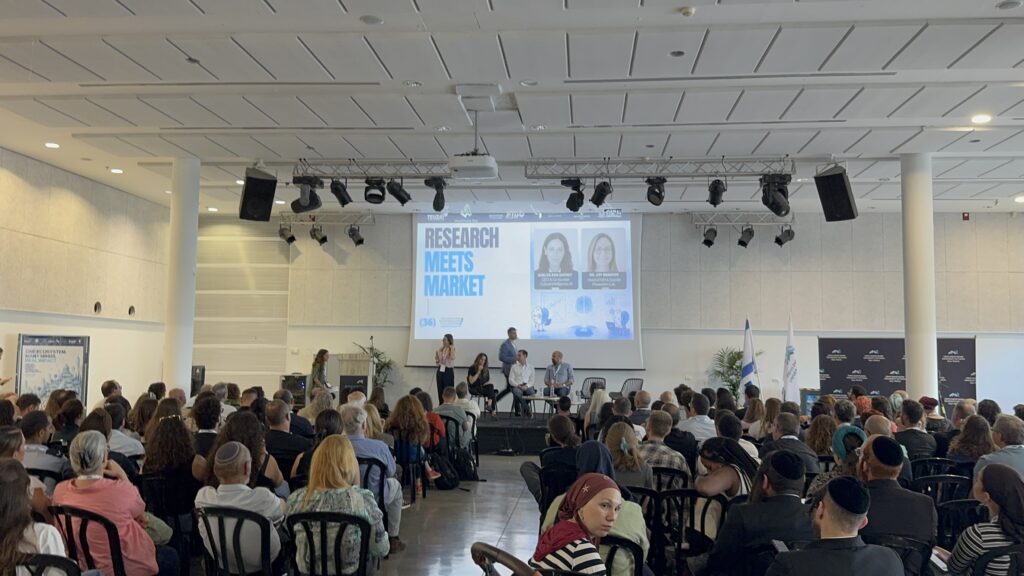
On July 6, 2026, more than 300 researchers, clinicians, entrepreneurs, investors, and health system staff gathered at the University of Haifa for the Haifa Mental Health Innovation Summit. The day closed with Demo Day: seven ventures, each building on real research and clinical experience, pitching live to a jury of investors, clinicians, and innovation leaders.
A therapist can only see so many people in a week. That number hasn’t changed much in decades, and it isn’t going to. What has changed is everything around it: how many people are asking for support, what technology can now do between sessions, and how much of a clinician’s week gets eaten by work that has nothing to do with actually helping someone.
That’s the real thread connecting the seven ventures that presented. None of them are trying to replace a therapist. Each one is trying to make a fixed amount of clinical capacity go further, just at a different point in the pipeline.
Freeing up the clinician’s time
The most direct version of this is GrouPulse, built by Zvi Eckstein, Chava Wiener, and Michael Ben Yishai. After a group therapy session, the therapist dictates a short summary. GrouPulse turns that into a structured group report plus individualized, goal-tailored reports for each participant, without recording patients and without anyone starting from a blank page. The pitch isn’t more insight, it’s less administrative weight. Documentation burden is a well-documented driver of clinician burnout, and the founders are explicit that the roadmap runs further: toward a vertical AI for group therapy with progress metrics, supervision support, and integration into existing patient management systems.
Extending care beyond the session
Rizolv.ai, from Ruby Avni and Elana Ben Amir, targets a different constraint: therapy happens for one hour a week, and the other 167 hours are where most of a client’s life, and most of their setbacks, actually happen. Rizolv gives clients an interactive AI avatar coach to practice concrete skills, self-regulation, mindfulness, interpersonal communication, between sessions, under therapist supervision. The therapist doesn’t lose visibility; they get the practice data back and can use it to adjust the work. It’s a deliberately narrow claim: not more therapy, but more value extracted from the therapy that’s already happening, while keeping the therapist in charge of the model of care.
Standalone support before, or instead of, a clinician
Two ventures skip the clinician relationship for now and go straight to the person under stress. HaCode, from Yossi Aharoni, Joe Guttman, and Amos Baram, is a hybrid program of online lessons, guided tasks, and an AI mentor that tracks a person’s progress over time, backed by human professional support. Its own framing is blunt: teaching people to turn stress into a growth engine, one skill at a time.
Aumira, built by Itay Warman, Bakir Sawalha, and Jennifer Harmony, takes a narrower and faster approach: an AI-generated, personalized EFT tapping session, built around a person’s specific emotional trigger, delivered in eight minutes from anywhere. The premise is that stress is universal but its triggers aren’t, and most existing tools are too generic to account for that.
Built for the populations generic tools don’t reach
Two ventures start from a specific, underserved population rather than a general one. InnerPact.ai, from Alex Lipnik, is built for people with ADHD, who often carry a particular kind of weight: difficulty balancing competing demands, and shame from expectations, their own or other people’s, that went unmet. Rather than generic productivity advice, it’s built to help people identify what’s actually blocking them and see enough of the bigger picture to register real progress.
Clarity, led by Taly Barel Hass, focuses on youth with social communication challenges, helping them navigate digital interactions in real time, while giving therapists and clinics objective, data-driven insight for assessment and treatment planning. It’s one of the few ventures in this group built simultaneously for the end user and the clinician evaluating them, which is a harder product to build than either alone.
Better self-understanding, direct to the individual
The X Clinic, from Rotem Glili Peer and Amos Bukobza, is being brought to market directly to consumers rather than through clinicians. It’s a personal-development platform built on a simple observation: two people can present with the same surface problem, say, anxiety, for entirely different reasons, one shaped by trauma, another by perfectionism, and each needs a different starting point. Rather than a single track for everyone, the X Clinic analyzes free writing, reflective questions, and mapping exercises to identify a person’s actual thought patterns (self-criticism, catastrophizing, all-or-nothing thinking, and similar) and builds a personalized path across domains like thinking, relationships, self-expression, and habits. The founders are careful to frame this as self-awareness infrastructure, not diagnosis or treatment, which matters given it’s reaching people with no clinician in the loop at all.
What actually ties these together
Looking at all seven side by side, the pattern isn’t “AI in mental health.” It’s that every one of them is making a bet about which part of a scarce resource, a therapist’s time, attention, judgment, is safest to hand off to software, and which part has to stay human. GrouPulse hands off writing. Rizolv hands off repetition. HaCode and Aumira hand off the first line of support entirely. InnerPact and Clarity hand off pattern recognition for a specific population. The X Clinic hands off the entire relationship, at least for now, betting that self-awareness work doesn’t need a clinician the way treatment does.
That last bet is also the riskiest one. The more a product notices, personalizes, or predicts about someone’s mental state, the more it starts to resemble clinical judgment, whether or not anyone intended it to, and the more it inherits a question no founder can fully answer alone: what happens, legally and ethically, when the product notices something worrying and nobody acts on it. None of these seven ventures have that fully solved. What they share is a willingness to build in public, at a summit designed to put founders, researchers, and funders in the same room, and let those questions surface before a product scales past the point where they’re easy to fix.
These ventures were presented at Demo Day during the Haifa Mental Health Innovation Summit 2026, hosted by the University of Haifa. For more information, visit hil.haifa.ac.il.