
Suicidality isn’t new in Israel. But since October 7, 2023, it has become harder to ignore. What was once whispered in corners is now showing up in living rooms, classrooms, army bases, and headlines.
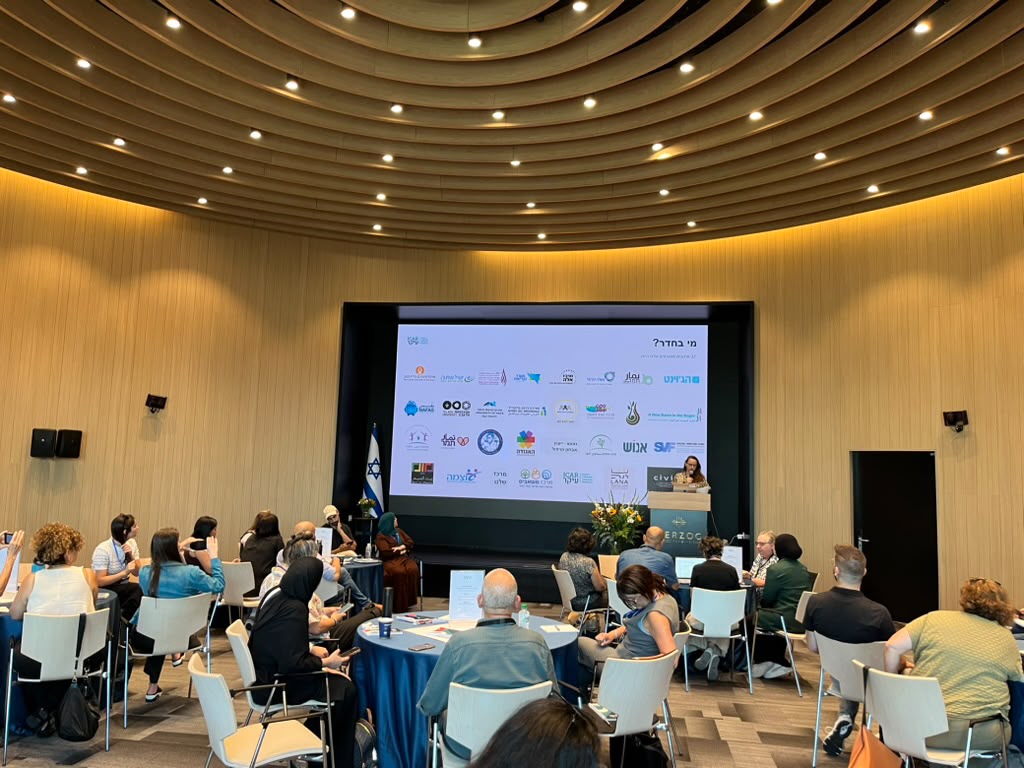
At ICAR Collective, we’ve seen the concern grow. We’ve felt the unease—especially among those working in education, healthcare, and community support. That’s why we hosted a webinar with Professor Yossi Levi-Belz, Chair of the Lior Tsfaty Center for Suicide and Mental Pain Studies, Ruppin Academic Center, one of Israel’s leading suicidality researchers, a member of the national suicide prevention council, and an advisor to key government agencies. His presentation became one of our most requested events to date.
Over the past 15+ years, Professor Levi-Belz has studied suicide not as a statistic but as a deeply human crisis. Since the war began, he’s been working non-stop in the field. And he doesn’t just offer science—he brings clarity, urgency, and hope.
Below are five myths he unpacked—and the realities we must all understand if we are to prevent suicide in the wake of collective trauma.
Myth #1: “If someone wants to die by suicide, nothing can stop them.”
Reality: Most people struggling with suicidal thoughts are ambivalent. They don’t want to die—they want the pain to end.
This distinction matters. In moment after moment, people on the edge describe not a desire for death, but a desperate need for relief. As Kevin Hines, a survivor of a suicide attempt off the Golden Gate Bridge, said: “The second my hand left the railing, I thought, ‘I don’t want to die.’”
According to Professor Levi-Belz, even a small thread of hope—a 10%, 5%, even 1% part that wants to live—is enough. That’s where prevention lies. Not in saving someone from death, but in connecting with them before despair becomes irreversible.
Myth #2: “People who are suicidal hide it—there’s no way to know.”
Reality: Most people give signs—verbally, behaviorally, or emotionally. With the right tools, communities can learn to recognize distress and step in early.
It's not about being a trained psychologist. It's about having good eyes and a willingness to ask. Someone withdrawing, giving away possessions, or talking about being a burden may be signaling something deeper. “It doesn’t take a psychiatrist—just a bus driver, a teacher, a friend—willing to notice and reach out.”
Awareness is part of public health. Just like CPR training, suicide prevention must become part of our everyday readiness. Because the earlier we catch it, the more lives we can save.
Myth #3: “Suicide prevention is the job of professionals only.”
Reality: Community members often make the difference. Prevention starts long before someone enters a clinic.
Time and again, Levi-Belz emphasized the importance of everyday people—neighbors, youth counselors, parents. He told us about Johnny Benjamin in London, stopped from jumping off a bridge by a stranger who simply asked, “Are you okay?” That conversation changed the trajectory of his life.
Models like QPR—Question, Persuade, Refer—can be taught in under an hour. They give people a script and the confidence to act. As Professor Levi-Belz put it: “The psychiatrist won’t meet the person in crisis if no one brings them there.”
Myth #4: “Talking about suicide puts the idea into people’s heads.”
Reality: Asking someone if they’re thinking about suicide doesn’t increase risk—it decreases it.
This myth is persistent and dangerous. Research consistently shows that talking about suicide with someone you're worried about actually reduces their risk. It tells them: You’re not alone. I’m here. You can tell me the truth.
“If you think a 16-year-old hasn’t already seen suicide in cartoons, TikToks, or news coverage,” Levi-Belz said, “you’re mistaken.” Silence doesn’t protect them—conversation does. What they need is a safe adult who will say, “Are you thinking about hurting yourself?” and stay in the room when the answer is yes.
Myth #5: “Suicide affects very few people—it’s not a big societal issue.”
Reality: Suicide is a public health crisis. In Israel, more people die by suicide each year than in road accidents.
About 500 Israelis die by suicide annually. Behind each one are dozens more—siblings, parents, spouses, coworkers—left to carry questions, trauma, and sometimes, guilt. The ripple effect is enormous, and the burden on families and the healthcare system is real.
Levi-Belz framed it clearly: “If a Boeing 747 crashed every year in Israel, we would act. If terrorists killed 500 people annually, we would respond. This is silent terror—and it’s time we treat it that way.”
Looking Ahead: What Happens After the Crisis?
While suicide risk may not spike during the acute phase of a disaster, it often increases later—when the adrenaline fades, when communities are still fractured but attention has shifted elsewhere. Based on data from past wars, pandemics, and disasters, Professor Levi-Belz cautioned that suicide rates in Israel could rise in 2025 and 2026.
That’s why prevention can’t wait. The window to act is now.
So What Can We Do?
Suicide prevention starts with connection. Not with fancy budgets or complex protocols (though both help), but with presence. With the courage to ask someone if they’re okay—and stay with them if the answer is no.
We believe trauma healing is a collective responsibility. Whether we’re building partnerships, training educators, or hosting conversations like this one, we’re working to create a trauma-informed society. One where no one falls through the cracks. One where no one feels alone in their pain.
As Professor Levi-Belz said in closing: “Our task is to overcome the experience of isolation. That means knowing how to look someone in the eye. How to ask the right question. How to stay, even when it’s uncomfortable.”
We agree. And we invite you to join us in holding the line.
🎥 Missed the Webinar? You can watch the full recording of our session with Professor Yossi Levi-Belz here.
Note: The webinar is in Hebrew. English subtitles are available on YouTube.
Let’s keep learning. Keep asking. Keep showing up—for ourselves, and for each other.