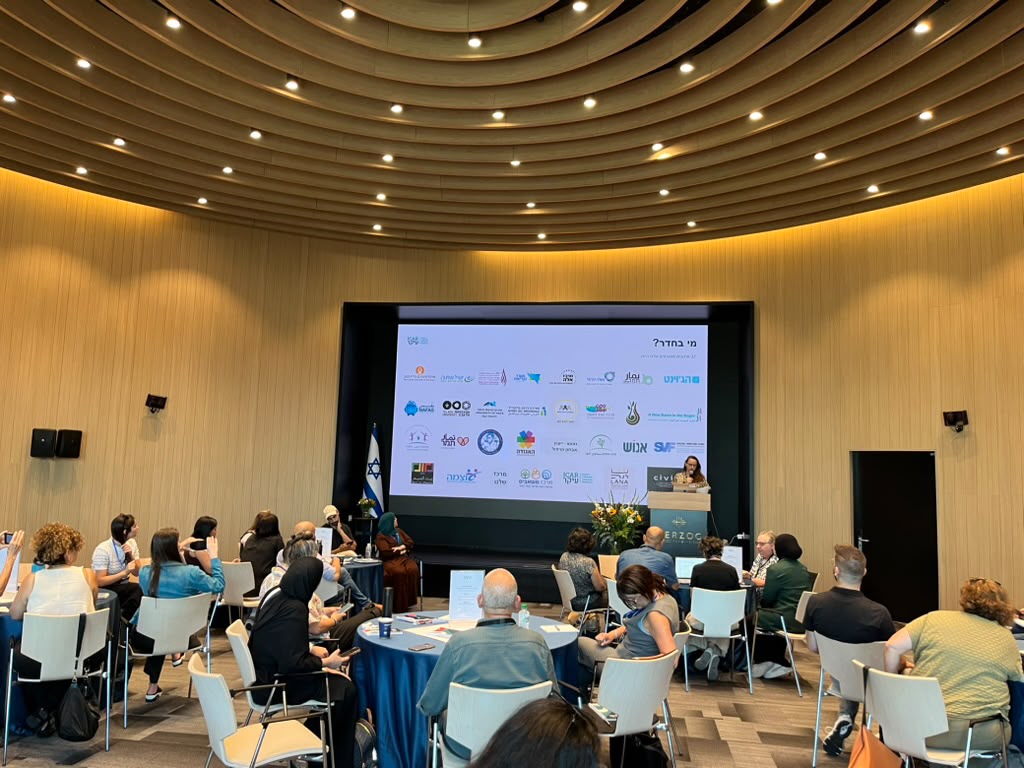
Last night, I had the pleasure of hearing Rani Dudai, the director of Joint-Tevet, speak at a beautiful event at the Peres Peace Center in Jaffa. Surrounded by the striking photography exhibition by Ziv Koren, which powerfully captured the events of October 7th, Rani presented the work Joint-Tevet has been doing post-October 7th, highlighting their efforts to support both individuals and businesses affected by the recent trauma. The atmosphere was one of reflection and urgency. It was a vivid reminder of why the work of Rani and the Joint-Tevet team is so crucial.

For those unfamiliar, the American Jewish Joint Distribution Committee (JDC or the Joint) has served as the world's largest and oldest Jewish humanitarian organization since 1914. JDC initially focused on supporting Jewish communities in crisis, and today, its reach spans across 72 countries. Wherever disaster strikes—whether earthquakes, tsunamis, or humanitarian crises—the Joint steps in to help those in need. The organization’s work has touched every major event in modern Jewish history, from the Holocaust to the Ethiopian immigration to Israel, and most recently, the conflict in Ukraine.

In Israel, the Joint takes on a unique role, functioning as an R&D partner for the government, with a mission not just to support Jewish communities but all people living in Israel, particularly marginalized groups.
Joint-Tevet is a division of the Joint that focuses specifically on employment. For over two decades, it has developed programs that have helped more than half a million people, particularly those in Israel’s underserved communities, including Arab Israelis, the ultra-Orthodox population, and residents of the geographic periphery, enter or reenter the workforce..
Rani, whose background is in social work and business administration, has been deeply involved in both social and economic initiatives throughout his career, from youth rehabilitation to strategic leadership. His experience is complemented by his participation in programs like the Maoz-Seal Leadership Program and the Executive Education Program at Harvard Business School.
One of the standout moments of last night’s presentation was the way he spoke about the importance of addressing the psychological and economic toll in tandem. “It’s not just about rebuilding physically,” he said, “it’s about giving people the tools to rebuild their lives, their businesses, and their communities.”
Rani outlined five key initiatives Joint-Tevet undertook in response. The first was to support workers and businesses, as he emphasized that the economic fallout went beyond physical destruction: “There’s a deep psychological and economic toll here. The damage to employment and business is massive.” Within 24 hours, Rani’s team was on the ground, working alongside government officials and international experts to begin laying the groundwork for recovery.
One of the most significant achievements has been the creation of an integrative system for managing national economic data, a first for Israel. “It’s a breakthrough,” Rani explained. “For the first time, all the economic data from government ministries is in one place, allowing for smarter, more informed decision-making.”
In addition to this, Joint-Tevet has been instrumental in launching a training program for managers in low-productivity sectors such as agriculture and construction. As Rani described it, this program is about more than just skills: “We’re talking about empowering 10,000 managers across industries to drive change and boost productivity. It’s a long-term investment in Israel’s economic future.”
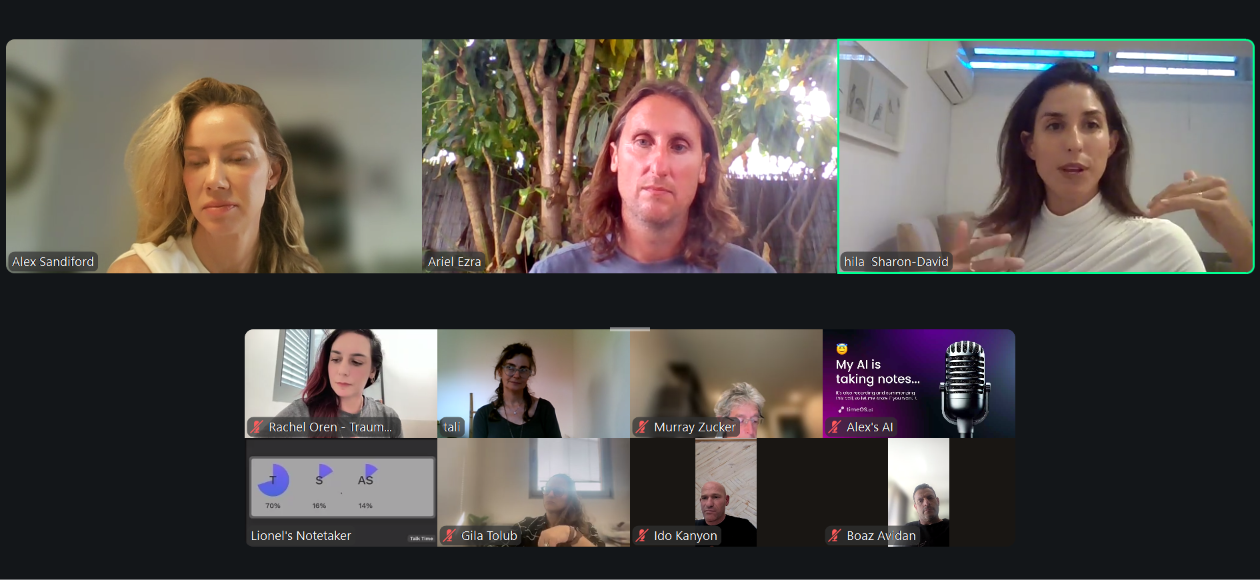
It was a powerful evening, reminding us all of the immense challenges ahead as well as the incredible work being done to ensure that Israel not only recovers but thrives. ICAR Collective had the pleasure of collaborating with Joint-Tevet and NATAL recently when we organized a roundtable on how to help people return to work after traumatic events, and seeing the depth of Rani’s ongoing efforts reinforces how crucial this partnership is.