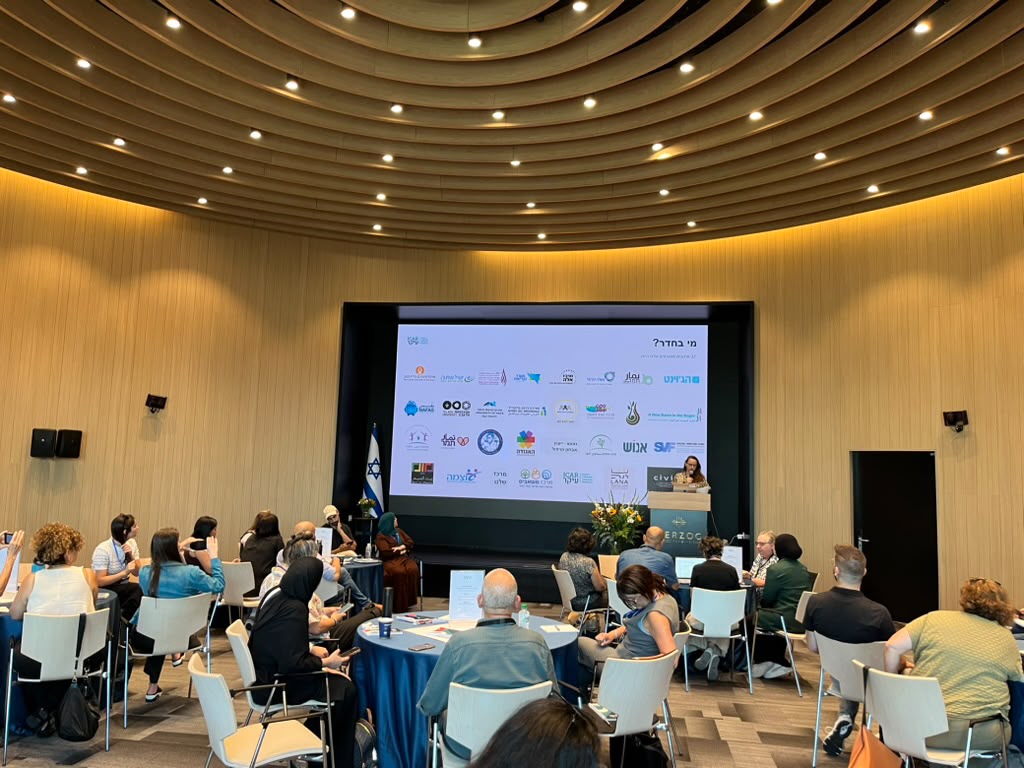
On September 9th, we gathered at Startup Nation Central in Tel Aviv for a morning that felt both urgent and grounding. The Margaret and Daniel Loeb Foundation, together with ICAR Collective, brought together grantees and donors to look closely at the mental health response in Israel after October 7.
The idea was simple: show what’s being done, hear the challenges, and create a space for people who care about healing and resilience to learn from one another.
Why We Met
Daniel Sperling opened on behalf of the Margaret and Daniel Loeb Foundation. He shared about coming to Israel a month after October 7 and how clear it was, already then, that the country would need deep support to recover from the trauma. Almost two years later, he returned and decided to gather the people managing the NGOs that the Foundation has been supporting—many of whom he had never met face to face. Instead of meeting them one by one, why not bring everyone into the same room and let them connect with each other? He also invited other funders interested in mental health, so they too could hear directly about the challenges and needs.
We met in the beautiful, modern offices of Startup Nation Central. As Michal Seror reminded us, SNC was built to be a global hub for Israeli innovation—and on this day it served as a hub for innovation of a different kind: how to heal a nation.
That choice shaped the morning. Walking into the room, you could feel the mix: grassroots leaders sitting next to major donors, system players next to surfers, rabbis next to service dog trainers. People didn’t wait for the agenda to connect—conversations started over coffee and carried through every break.
For three hours we listened to ten organizations and held two rounds of discussion. Funders from JFNA, JUF, Foundation @Cross River, the Lis and Raviv families, Natalie Milstein, Daniel Goldman and others took part—not just as observers, but as partners asking sharp, important questions.
The morning was structured, but it never felt stiff. Each NGO had seven minutes. We kept time so that discussion, the real value of the day, could happen.
Culturally Adapted Care
Five NGO leaders spoke about diverse populations and the need for culturally adapted and novel approaches to care.
-
Fortify Israel trains teachers in Haredi schools to run resilience groups. They started with communities of the South that had been impacted by the war and how they are embedding resilience across whole schools. The challenge now is moving from anecdotal stories to measurable data.
-
HaGal Sheli (surf therapy) described what it means to be with kids and veterans in the water. On October 7, they jumped from supporting 70 trauma survivors to 3,700. Independent research shows 75–81% reductions in PTSD symptoms for participants who complete their program. One story stood out: a boy convinced he failed his kibbutz because he didn’t fight. The program helped him reframe—he saved his sister by keeping her safe in the bomb shelter, which made him the hero.
-
Maaglei Nefesh works at the intersection of halacha and mental health. Rabbi Yoni Rosenzweig gave concrete examples—women asking if they could attend water-based therapy, or use their phone on Shabbat to regulate PTSD flashbacks. Without halachic framing, people won’t seek help. The organization trains rabbis, answers thousands of questions, and is now building a research arm.
-
Briah Foundation focused on women’s health, highlighting how hormonal transitions are often ignored in mental health. Their incubator seeds innovations inside the medical system, like clinics that integrate menstrual tracking into mental health care. Their aim is to produce data that can shift Ministry of Health policy.
-
Wuste Tsega focuses on the Ethiopian community, where cultural misunderstandings have led to misdiagnosis and over-hospitalization. They train clinicians to see cultural expressions accurately and invite other NGOs to consult with them when working with Ethiopian Israelis.
The main lesson from this round was clear: trauma healing must respect culture. Whether through rabbis, classrooms, surfboards, or women’s health services, care only works if it fits the people it’s meant to serve.
Round Two: Soldiers and Families
The second block turned to soldiers, reservists, and families.
-
Belev Echad matches soldiers with service dogs. Soldiers describe their dogs as lifesaving, not in abstract terms but in daily functioning: being able to parent again, to handle triggers, to walk outside.
-
IDF Widows and Orphans reminded everyone that the impact of loss is long-term. They described their work in three areas: lobbying and representation, financial aid, and growth programs for children and spouses.
-
No Soldier Left Behind has become a community hub for anyone with military-related PTSD, regardless of Ministry of Defense recognition. After October 7, they expanded from one center to four.
-
The Cohen Veterans Network Clinic is the first of its kind outside the U.S. It provides next-day appointments and holistic care for veterans and their families. By including spouses, parents, siblings and children, they aim to prevent secondary trauma.
-
The Duvdevan Foundation shared the unique stresses of serving in elite units: multiple identities, rapid shifts between home and combat, and the lack of space to process. Their team-based retreats integrate nightly discussions with alumni psychologists. The peer format reduces stigma—raising your hand in a group is easier than asking for help alone.
The message from this round was also clear: healing doesn’t stop at the individual soldier. Families, units, and peer communities are central. Interventions that lower stigma and create collective responsibility work best.
Where We Agree — and What Still Needs Work
By the end of the morning, five clear points of agreement stood out:
-
Care must be culturally adapted.
-
Families need to be part of the healing.
-
Stories must be backed by data.
-
Caregivers need protection from burnout.
-
No single NGO can carry this crisis alone.
But agreement on the “what” doesn’t solve the “how.” The discussions raised questions we still need to wrestle with:
-
Measurement: What framework could allow all NGOs to track outcomes in a way that is light, consistent, and credible?
-
Equity: How do we make sure services don’t cluster in some areas while others go without?
-
Scalability: What does it really mean to scale—replicating centers, training more staff, going digital, embedding practices into schools and communities?
-
Cultural fit: How do we resolve the barriers that keep people from care—whether halachic concerns, or stigma?
-
Sustainability: How can philanthropy support growth without burning people out or creating dependency?
Closing
The morning showed the strength of bringing people together. There was alignment on core principles, and a shared sense that no one can do this alone. The harder work now is to answer the “how” questions together.
As people moved to the funders’ lunch, you could see the real value wasn’t only in the presentations—it was in the conversations that began between them. That is what will carry this work forward: relationships, trust, and the willingness to keep asking the hard questions while holding on to what we already know.